Choosing the best Audio Smartglasses in 2026 is less about chasing the loudest speakers and more about finding glasses that fit daily life. A useful pair should sound clear on a busy sidewalk, stay comfortable through a long commute, and avoid leaking too much audio nearby. Battery life, microphone quality, prescription options, controls, and privacy features matter too. Small details count.
Meta CEO Mark Zuckerberg has described the appeal of the broader category this way: “I think glasses are the ideal form factor for AI, because you can let an AI see what you see and hear what you hear.” That vision helps explain the interest, but it does not tell shoppers which pair sounds best. Nor does it mean every added feature is useful. Sometimes, simpler is better.
This guide compares Audio Smartglasses by practical criteria, including sound, comfort, call performance, battery life, and value. It also considers where open-ear audio falls short: bass may feel light, and traffic can drown out a podcast. Results can vary with fit, surroundings, and personal hearing. There is no perfect pair for everyone. A careful comparison should separate verified specifications from hands-on impressions and marketing claims. The rankings ahead aim to make those trade-offs clear, while acknowledging that a strong product on paper may still feel awkward after an hour.
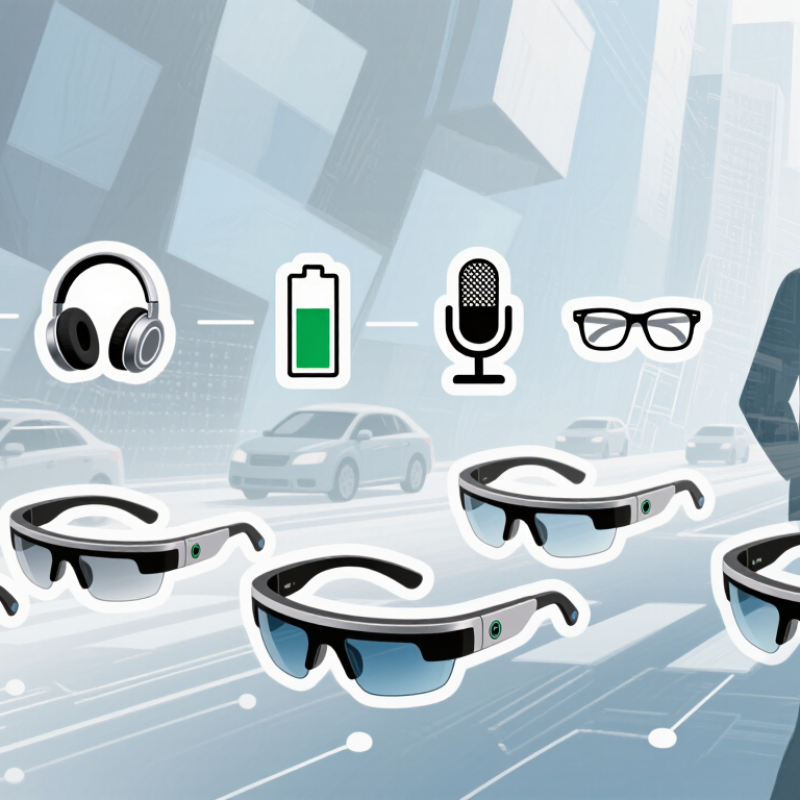
Audio smartglasses place miniature speakers inside the frame’s arms, directing sound toward the ears without sealing them. The open-ear design lets wearers hear a podcast while noticing a cyclist or a colleague nearby. No earbuds required. A Bluetooth connection carries audio from a phone; built-in microphones capture calls and voice commands. Small batteries, controls, and wireless components usually sit inside the thicker temples. Some models also use companion apps for settings, but features vary.
Bluetooth SIG’s 2024 Market Update projected more than seven billion Bluetooth device shipments annually by 2028. That figure describes the wider device ecosystem, not smartglasses sales, but it shows how established the core connection technology is. In use, sound quality depends on speaker position, frame fit, and surroundings. Wind and busy streets can make voices harder to hear, while nearby people may catch fragments of audio at higher volumes. This is an imperfect compromise, not private listening. The World Health Organization warns that over one billion young people risk hearing loss from unsafe listening practices; keeping volume moderate matters even with open-ear speakers. Before buying, check comfort after a long wear, call clarity outdoors, and whether the controls work without reaching for a phone.
Audio smartglasses should sound clear at a comfortable volume, not merely loud in a quiet room. Listen to spoken audio and music in a calm space, then try them near ordinary street noise. Open-ear speakers can make voices easy to hear, but bass may feel light and sound can escape in a silent office. Fit matters.
Frame shape and weight affect comfort more than a specification sheet suggests. Wear the glasses for at least twenty minutes and notice pressure at the nose or behind the ears. Check whether the lenses suit your vision needs, and whether the arms feel stable when you turn your head. A perfect fit is personal.
Microphone quality deserves a real test. Record a short voice message indoors, then repeat it outdoors where a light breeze can expose weaknesses. Ask whether your voice stays intelligible without shouting. Not perfect. Battery claims also need context: calls, volume, and frequent playback can change real-world endurance. Compare charging time and whether the case is easy to carry. Physical buttons should be usable without hunting for them, while touch controls can misread a tap. Small details matter. Check how the glasses connect to your phone, what happens when the connection drops, and whether the controls remain simple during a walk.
| Feature | What to Compare | Why It Matters | Best Fit |
|---|---|---|---|
| Open-ear sound quality | Speech clarity, bass balance, maximum comfortable volume, and sound leakage | Open-ear speakers leave the ear canal unobstructed, which can help you hear surrounding sounds. They may also leak more audio than sealed headphones, especially in quiet places. | People who want convenient listening while remaining aware of their surroundings |
| Call microphones | Voice clarity indoors and outdoors, wind handling, and performance in noisy environments | Microphone placement and noise processing affect how clearly callers hear you. Outdoor wind can make calls difficult even when music playback sounds good. | Frequent callers and people who take meetings away from a desk |
| Battery life | Rated continuous playback time, charging time, and the effect of volume and call use | Battery runtime depends on usage, volume, wireless connection, and enabled features. Compare published playback figures under similar conditions rather than assuming they represent every use case. | Listeners who need several hours of use between charges |
| Fit and comfort | Frame weight, nose-pad adjustment, temple pressure, and stability during movement | Weight distribution and frame shape influence comfort over long sessions. A secure fit also helps keep the speakers positioned consistently near the ears. | All-day wear, walking, and light activity |
| Prescription compatibility | Supported lens types, prescription range, lens replacement options, and frame availability | Prescription support varies by frame design and lens provider. Confirm compatibility for your prescription before buying or ordering replacement lenses. | Prescription-wearers who want one pair for vision correction and audio |
| Water and sweat resistance | The stated IP rating and the manufacturer’s care instructions | An IP rating describes tested resistance to dust or water under specified conditions. It does not mean a device is suitable for every weather condition or for submersion. | Commuting and workouts, when the stated rating supports the intended use |
| Controls and connectivity | Physical buttons or touch controls, pairing steps, connection stability, and device compatibility | Easy controls are useful when a phone is out of reach. Bluetooth features and audio options can depend on both the glasses and the connected phone or computer. | People who switch between calls, music, and multiple devices |
| Privacy and audio leakage | How audible playback is to nearby people at typical listening volume | Open-ear designs do not isolate sound like in-ear headphones. Lower volume can reduce leakage, but very quiet settings may still make private listening harder. | Users who listen in shared spaces and want to assess discretion |
| Repairability and support | Warranty terms, replacement parts, battery service, and availability of compatible lenses | Smartglasses combine eyewear and electronics, so damage to the frame or battery can affect the entire product. Check repair and support options before purchase. | Buyers prioritizing long-term ownership and easier servicing |
Comparison tip: Try the glasses on, test call quality in a realistic environment, and check the latest specifications and compatibility details before purchasing. Performance and availability vary by model.
Leading audio smartglasses available in 2026 are designed for sound that fits ordinary routines. The strongest options pair open-ear speakers with clear microphones, simple controls, and frames comfortable enough for a long walk. Voices should sound centered, not tinny. On a noisy street, call quality and sensible volume matter more than heavy bass.
Battery life, fit, and lens choices separate useful glasses from impressive demos. Check whether the arms press behind your ears, especially with a hat or headphones. Fit is personal. Try them indoors. Then test a call beside traffic, where wind can expose weak microphones. Prescription compatibility and replaceable lenses also matter for everyday wear.
Some models suit calls and podcasts, while others work better for navigation prompts or casual listening. None will match the isolation or depth of dedicated headphones, and nearby listeners may hear sound at higher volumes. That trade-off is easy to underestimate. Compare comfort after an hour, not just the first few minutes, and check whether controls remain usable without reaching for your phone.
What makes the best audio smartglasses in 2026 depends on where you wear them. Open-ear speakers keep your ears clear, but sound can thin out on a windy street or beside traffic. Frames with stronger directional output usually sound fuller at moderate volume, though nearby people may hear more. Tiny speakers leak. Check call clarity outdoors, not just bass in a quiet room. Bluetooth SIG’s 2024 Market Update projects 7.5 billion annual Bluetooth device shipments by 2028. That signals a crowded wireless ecosystem, not better audio by itself.
Comfort is personal. A light frame can still press behind the ears after an hour, especially with glasses underneath. Try the fit while walking and turning your head. Battery claims also need context: continuous music, calls, and voice features drain power differently. Compare tested playback time at a stated volume, then consider how often the case or frames need charging. That trade-off is easy to underestimate. The WHO-ITU Global Standard for Safe Listening Devices and Systems sets an adult reference of 80 dB for 40 hours weekly. It is a safety benchmark, not a sound-quality score; compare volume controls and listening prompts rather than assuming louder means clearer. I would treat any single battery figure cautiously unless the test conditions are published.
Audio smartglasses suit people who want calls, navigation, or quiet background listening without covering their ears. The right pair depends less on a long feature list than on fit and daily use. Try them on, if possible, and check whether the arms press behind your ears after ten minutes. Small discomfort becomes surprisingly distracting.
Listen in a quiet room, then near a street or fan. Open-ear speakers can make voices clear, but they may struggle in noisy places and let nearby people hear some audio. Check microphone quality, physical controls, battery life, water resistance, and whether the lenses match your needs. Useful details beat impressive-sounding claims.
Set a budget around the features you will actually use. A lower-cost pair may be enough for occasional calls and podcasts; frequent use may justify better comfort, clearer microphones, and longer battery life. More expensive does not always mean more wearable. Check replacement lens costs and the return policy before buying. Specifications rarely show how a frame feels after a full day, and that is an inconvenient gap in the comparison process. Test the basics first.
Play spoken audio in a quiet room, then near a fan or street noise. Notice whether voices stay clear at a comfortable volume. Fit comes first.
They keep your ears uncovered and can make voices easy to hear. Wind and traffic may weaken the sound, while people nearby may hear some audio. Tiny speakers leak.
Wear them for at least twenty minutes. Walk, turn your head, and notice pressure on your nose or behind your ears. Comfort is personal.
Check playback time at a stated volume, then consider calls and voice features. These can drain power differently. I would not trust one battery figure alone.
Record a short voice message indoors, then repeat it outside in a light breeze. Check whether your words stay clear without shouting. Not perfect.
Physical buttons can be easier to find while walking. Touch controls may misread a tap, so try both before deciding.
They can suit people who want calls, navigation, or background listening without covering their ears. They may disappoint in noisy places.
Check lens suitability, replacement lens costs, water resistance, and the return policy. Choose features you will actually use. More expensive does not always mean more wearable.
One adult listening benchmark is 80 dB for up to 40 hours weekly. It is a safety reference, not a sound-quality score. Louder is not always clearer.
Audio Smartglasses combine the familiar form of everyday eyewear with built-in speakers, microphones, and wireless connectivity, letting users listen to audio or take calls without covering their ears. When comparing them, consider sound clarity, volume, microphone performance, comfort, controls, durability, and how easily they connect to your devices. Battery life and charging convenience also matter, especially if you plan to wear them throughout the day.
The leading Audio Smartglasses in 2026 can differ significantly in sound quality, fit, weight, and listening time. Some prioritize balanced audio and clear calls, while others focus on lightweight comfort or longer battery life. The right choice depends on your routine, preferred style, and budget. Think about where you will use them, how long you will wear them, and which features you value most before choosing a pair that suits your needs.