Buying a Magnetic Smartwatch Charger in bulk is not just a price comparison. A small mismatch in pin spacing or connector design can make an entire shipment unusable. Buyers should confirm the exact watch models, charging interface, cable length, magnet alignment, and required output before requesting quotes. Ask suppliers for technical drawings and test samples. Check that the charger holds firmly against the watch without requiring awkward repositioning.
A practical buying rule is: “Approve the connection before you approve the quantity.” This is an original editorial principle, not a verified quotation from a named industry expert; no source material was provided to support a real attribution. That distinction matters. Reliable purchasing advice should be traceable, not dressed up with invented authority.
For bulk orders, compare more than the unit price. Review sample performance, production capacity, stated lead times, packaging, and the supplier’s quality-control process. Request written confirmation of compatibility and clarify how defects or inconsistent batches are handled. If wireless charging protocols or safety documentation are relevant, verify the details for the specific product rather than relying on broad claims. A sample may work perfectly on one watch, then fail on another model in the same order. That possibility deserves attention. This guide will help buyers ask sharper questions, assess real-world fit, and reduce avoidable surprises before committing to a large Magnetic Smartwatch Charger order.
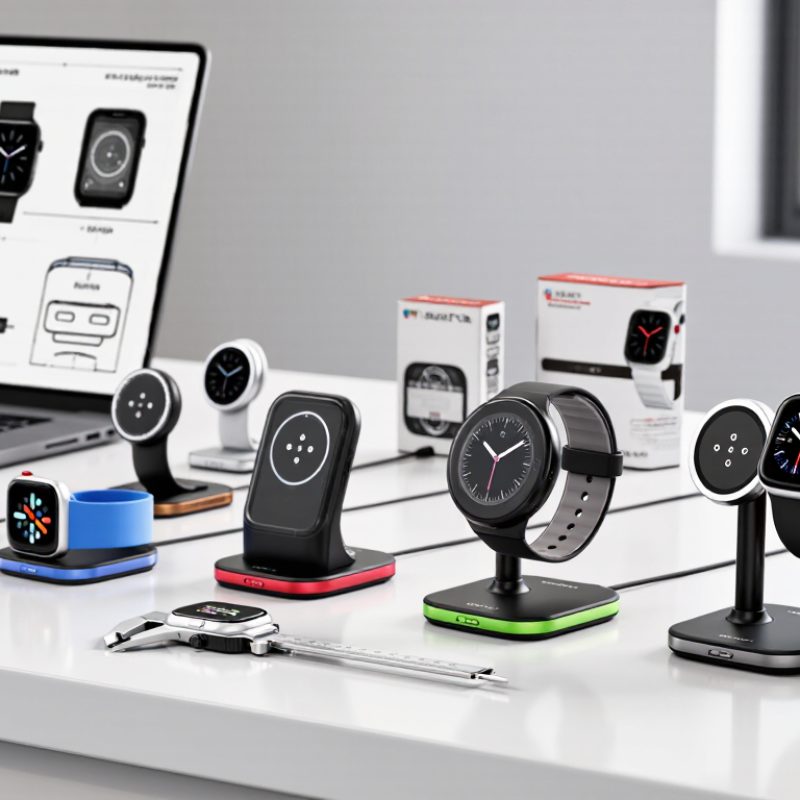
For a bulk order, compatibility starts with the exact smartwatch models and generations your customers use. Magnetic chargers are not universal. A puck may attach firmly yet fail to align its contacts. Record the watch’s charging interface, contact layout, required voltage and current, and cable connector. Use the device maker’s published specifications rather than guessing from appearance.
Small details matter. Compare puck diameter, contact spacing, cable length, and magnet position against a physical watch sample. Check that the magnet holds the charger in place without pulling the watch off a desk or making removal difficult. Then test charging stability and surface temperature during a full charging session. A quick connection is not enough.
For large quantities, request samples from the actual production batch and test them with each supported watch model. Confirm that charging starts consistently after the watch is repositioned, and inspect several units for uneven contact pins or loose cables. Keep a written compatibility matrix for purchasing and quality checks. It can feel overly careful, but assumptions become costly in a bulk order. Even a small model variation can change the fit.
For bulk orders, compare charging speed using the smartwatch’s stated input requirements, not wattage alone. A charger with a higher power rating will not necessarily charge a watch faster. The watch may limit how much power it accepts. Ask for the charger’s output voltage and current, then test samples with the intended watch models. Time a charge from a similar starting battery level and check whether the magnetic puck stays firmly aligned. Small differences matter.
Check the power standard at the adapter end, too. USB-C and USB-A describe connector types; they do not guarantee the same charging performance. Confirm that the cable and power source meet the charger’s input requirements. For larger purchases, request clear specifications and test a sample batch before approving the full quantity. That step can feel slow. It can also catch mismatched cables early.
Safety features deserve equal attention. Look for overcurrent, overvoltage, short-circuit, and temperature protection, along with documentation relevant to the destination market. During testing, feel for unusual heat around the puck and cable after repeated charging cycles. Warmth can be normal, but a hot connector is a reason to pause and investigate. Supplier claims are useful, though not a substitute for checking real samples. I would still leave room for variation between watch models.
| Comparison Dimension | USB-A, 5 V Supply | USB-C, 5 V Supply | USB-C Power Delivery Supply | Bulk-Order Verification |
|---|---|---|---|---|
| Power standard | USB power input; commonly supplied at 5 V. Available current depends on the adapter and cable. | USB-C describes the connector, not a guaranteed charging speed. A 5 V source can power compatible chargers. | USB Power Delivery can negotiate supported voltage and current levels between compatible equipment; higher-power modes are not automatic. | Confirm the charger’s specified input range and whether the supplied cable and adapter meet it. |
| Watch-side connection | Usually a model-specific magnetic contact or charging puck; USB-A does not define watch compatibility. | The USB-C plug does not make the magnetic charging end universal. | PD support on the power source does not ensure compatibility with a particular watch or charging puck. | Test against the exact watch models and charging interfaces intended for use; verify alignment, contact position, and fit. |
| Charging speed | Depends on the adapter’s available output, cable, charger design, and the watch’s supported charging rate. | A USB-C connector alone does not guarantee faster charging than USB-A. | PD can provide more power when both source and device support and negotiate it; the watch may still limit its own charge rate. | Request measured charging-time results for the intended watch models and test a production sample under consistent conditions. |
| Power rating to check | Check the stated input voltage and current; do not infer output capability from the connector alone. | Check the adapter’s label and the charger’s input specification, including any minimum current requirement. | Check supported PD profiles and confirm the charger works at the negotiated profile required by the product. | Compare rated input and output data on labels, technical documents, and samples; avoid unsupported “fast charging” claims. |
| Safety features | Look for documented protection against overcurrent, overvoltage, and overheating where applicable. | USB-C alone does not confirm that protective circuitry or compliance testing is present. | PD negotiation helps compatible equipment select a supported power level; it does not replace product-level safety protections. | Request test reports and applicable market approvals for the complete product and power adapter, not just a component. |
| Magnetic and thermal performance | Magnetic attachment supports positioning but does not itself establish charging compatibility or safe operating temperature. | Check that the watch remains securely aligned during normal use and that contacts are clean and undamaged. | Higher-capability power sources should only be used with a charger designed to accept the relevant input and manage heat safely. | Run repeated charge-cycle and temperature checks, including tests for misalignment and extended charging. |
| Best fit for bulk purchasing | Suitable when the target users already have compatible USB-A power sources and the charger’s input requirements are met. | A practical choice when USB-C cables or adapters are preferred, provided the watch-side interface is confirmed. | Useful where a compatible PD source is available; avoid paying for PD capability unless testing shows a benefit for the target setup. | Approve a pre-production sample, confirm packaging and cable contents, and check consistency across a representative batch. |
Note: USB connector type and magnetic attachment do not establish universal smartwatch compatibility. Confirm the exact watch model, charger input specifications, and tested charging performance before placing a bulk order.
For bulk orders, inspect the charger’s contact pins, housing, and cable jacket before comparing prices. Metal contacts should sit evenly and resist corrosion; a loose or rough pin can interrupt charging. A smooth housing helps prevent scratches on a watch back, while a firm magnetic connection reduces accidental separation. Small details matter.
Material names alone do not prove durability. Ask for samples and check how the charger behaves after repeated attachment, removal, and cable bending near the connector. Look for split insulation, exposed wires, weak magnets, or pins that no longer spring back. A simple bend test can reveal early weaknesses, but it cannot predict every desk, bag, or shared charging station. Not always. Keep a few samples for longer-term checks, even after approving a production batch.
Cable design affects daily handling. A useful length reaches a desk outlet without dragging the watch, while flexible insulation resists tangling in storage. Reinforced strain relief at both ends can reduce wear, though an overly stiff section may transfer stress elsewhere. That trade-off deserves attention. For large quantities, review connector fit, cable length, and magnetic alignment across multiple units, not just one sample. Record defects by batch so suppliers can address recurring problems before the next order.
For bulk orders, judge capacity with production evidence, not a spreadsheet promise. IDC’s Worldwide Quarterly Wearable Device Tracker recorded 506.3 million wearable-device shipments in 2023, illustrating the market’s scale. Ask for monthly output by production line, current utilization, and a dated ramp plan. Request a pilot lot matching your cable length, magnet layout, and packaging. Small details matter. Check the line.
Quality control should cover incoming materials, assembly, and final testing. Ask for measured magnetic pull force, contact resistance, charging stability, and temperature-rise limits, with records linked to lot codes. Review defect trends and corrective-action closure, not just a recent pass rate. A clean audit file cannot prove consistent output; it is easy to overlook weak sampling.
Verify that certificates and test reports match the exact model and factory. ISO’s 2023 Survey records ISO 9001 certifications across 189 countries and economies; certification indicates a quality-management system, not a defect-free product. For any included power adapter, check applicable electrical-safety and EMC evidence, such as IEC 62368-1 testing where relevant. Confirm laboratory accreditation and report scope. Keep a sealed reference sample, then compare early bulk units against it before shipment.
When comparing magnetic smartwatch chargers for a bulk order, do not judge the unit price alone. Ask suppliers to separate charger, cable, included adapter, packaging, inspection, and freight costs. Costs add up. For example, a $2.40 charger with $0.35 retail packaging and $0.18 carton allocation costs $2.93 before freight, taxes, or payment fees. Divide fixed charges by the confirmed order quantity, not the quantity you hope to buy. Then compare the landed cost per usable unit. A low quote may hide a short cable or a magnetic head that slips during charging. Test samples with several compatible watches.
Packaging affects protection and shipping volume. Request carton dimensions, gross weight, and photos of inner trays and labels. If gift boxes are unnecessary, ask whether a simpler sleeve can reduce cost without letting charger heads knock together. Test samples. Confirm production lead time, dispatch date, shipping method, and who pays freight and import charges. Agree in writing how shortages or transit damage will be handled. A DDP quote may simplify budgeting, while an EXW quote can leave transport coordination to you. Compare responsibilities, not just prices. Allow time for inspection delays; the first delivery estimate may be optimistic, even with a clear purchase order.
No. A charger may attach but miss the contact points. Check the exact watch model and generation.
Record the charging interface, contact layout, voltage, current, and cable connector. Use published device specifications, not visual guesses.
Compare puck diameter, contact spacing, and magnet position with a real watch. Check cable length, too.
Confirm charging starts after repositioning the watch. Monitor stability and surface temperature during a full session. A quick connection proves little.
The charger should stay attached without pulling the watch from a desk. It should also come off without a struggle.
Inspect contact pins, housing, cable jacket, and strain relief. Look for rough pins, loose cables, split insulation, or weak magnets.
It can reveal early weaknesses near connectors. It cannot predict every bag or shared charging station. Not always.
Test samples from the actual production batch with each supported watch model. Inspect several units and record defects by batch.
It gives purchasing and quality teams a written model-by-model reference. It may feel overly careful, but small variations can cause costly fit problems.
Choosing a Magnetic Smartwatch Charger for bulk orders starts with confirming compatibility across watch models, connector layouts, and charging requirements. Compare charging speed and supported power standards, while checking for practical safety features such as protection against overheating, overcurrent, and short circuits. These details help ensure reliable everyday use across a large batch of devices.
For bulk use, assess the cable’s materials, strain relief, connector strength, and overall durability. Also review the supplier’s production capacity, quality-control process, and relevant product certifications. Before placing an order, calculate the full cost, including packaging, shipping, and any customization, and confirm delivery schedules and order terms. A careful comparison of these factors can help buyers select a dependable charger that meets performance needs, stays within budget, and arrives in the quantities and timeframe required.