Choosing the right Women Jewelry Style Smartwatch requires more than matching a watchcase with a bracelet. It requires balancing appearance, comfort, technology, and daily routines. IDC’s Worldwide Quarterly Wearable Device Tracker reported 537.5 million wearable-device shipments in 2024, representing 11.1% annual growth. However, IDC measures the broader wearable market, not jewelry-style watches alone. That limitation matters.
Tim Cook, Apple’s chief executive and a leading wearable-technology figure, once said, “Apple Watch is the most personal device we’ve ever created.” His statement explains why personal style deserves serious attention. A rose-gold case may suit evening clothing, while a slim silver design can work with office tailoring. A heavy bracelet may look luxurious but feel uncomfortable during an eight-hour workday.
Details matter. Consider strap flexibility, clasp security, screen brightness, battery life, and skin-friendly materials. Health features also require careful evaluation. Heart-rate tracking can support personal awareness, but it should not replace professional medical advice. The best Women Jewelry Style Smartwatch should complement real habits, not create another daily burden.
Readers should also question polished marketing claims. Battery estimates often depend on settings, notifications, and fitness tracking. Water resistance is not the same as unlimited swimming protection. Price does not guarantee accuracy, durability, or elegance. A thoughtful choice begins with honest priorities: jewelry presence, discreet functionality, or balanced performance. Sometimes, the most attractive model is not the most practical one. That is worth reconsidering before purchase.
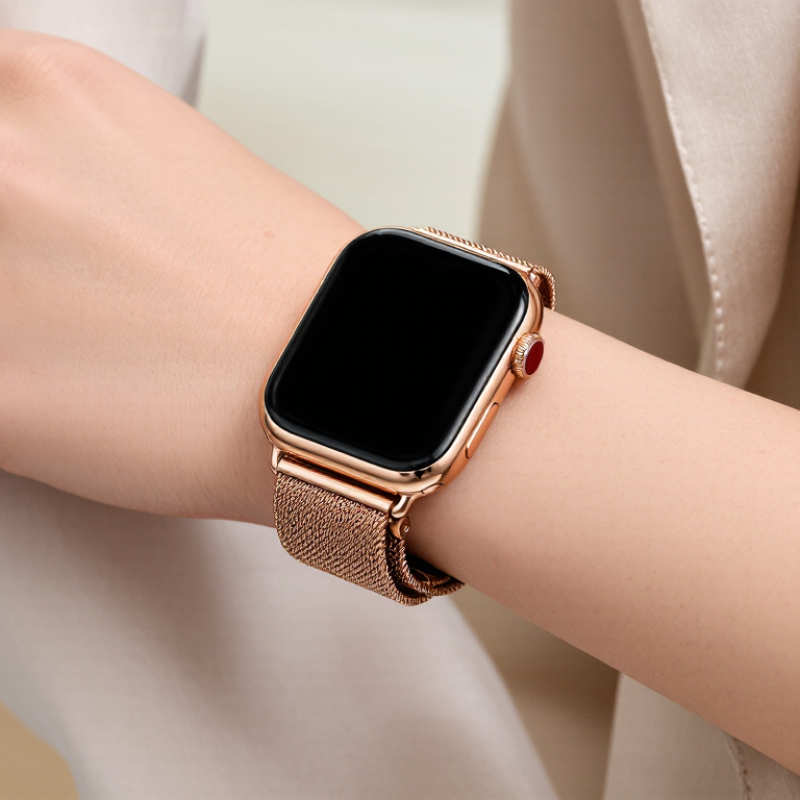
A jewelry-style smartwatch should look intentional before its screen lights up. Its case usually has balanced proportions, softened edges, and a slim profile. Polished metal can create a refined sparkle, while a brushed finish feels quieter and more practical. The strap matters just as much. A narrow metal bracelet, smooth leather band, or fabric strap in a muted color can change the entire impression. Small details count, including the clasp, bezel, button shape, and spacing around the display. If the screen looks oversized, the watch may feel more like sports equipment than jewelry.
When choosing one, place it beside the accessories you already wear. Does the case match your rings or earrings? Does the strap sit comfortably under a sleeve? A watch that looks beautiful but catches on clothing is not a successful choice. I also recommend checking the weight and adjusting the strap for several hours. A glossy surface looks elegant, but it can reveal fingerprints and scratches quickly. That is easy to overlook. The best design balances decoration with daily function, including readable notifications, reliable sensors, and a secure closure.
Tips: Choose one dominant metal tone. Keep the case slim. Test it with casual and formal clothing. Check the display in bright daylight. Think about your real routine, not only the product photos. A slightly imperfect match may feel more natural than a carefully coordinated set.
How to Choose the Best Jewelry Style Smartwatch for Women?
A jewelry-style smartwatch should match your daily wardrobe, not compete with it. Start with the case material. Polished stainless steel suits tailored shirts, office dresses, and silver jewelry. Gold-toned finishes add warmth to cream, brown, and autumn colors. Ceramic can feel smoother and more modern, but it may appear less traditional. Consider weight, too. A beautiful case becomes annoying when it pulls on a narrow wrist.
The market is broadening. The International Data Corporation’s Worldwide Quarterly Wearable Device Tracker recorded 537.6 million wearable-device shipments worldwide in 2023. Counterpoint Research reported a 7% year-on-year decline in global smartwatch shipments during 2024. These figures suggest a crowded market, where design and personal comfort can matter as much as technical features. A smaller watch with a softer metallic tone may serve you better than a larger, brighter model.
Color matching needs a simple test. Hold the watch beside your favorite earrings and shoes in natural light. Cool undertones often pair well with silver, white, navy, and charcoal. Warm undertones usually complement gold, beige, olive, and rust. Mixed metals can work, but they need one repeated detail, such as a gold buckle or ring. Do not trust online images completely. Screens change color. No choice is perfect. Your lifestyle may also change, and that matters more than a seasonal trend.
A jewelry-style smartwatch should match your real routine, not only your wardrobe. If you commute, choose a slim case that rests comfortably beneath a shirt cuff. A secure clasp matters during crowded train rides and quick walks. For office wear, a discreet display can show messages without looking overly technical. Pretty is not enough.
Your health priorities should guide the features. If sleep matters, check whether the watch offers sleep-stage estimates, gentle alarms, and reliable overnight comfort. For daily exercise, look for step tracking, heart-rate monitoring, workout modes, and water resistance. A bright screen helps during outdoor walks, while strong battery life reduces charging interruptions. I prefer simple controls because complicated menus often discourage regular use. However, no sensor is perfect. Heart-rate readings can change with movement, skin contact, or a loose fit.
Consider how the watch supports your lifestyle over several months. Stress reminders may help during a demanding workday, but they should not create more anxiety. Health data can reveal patterns, yet it cannot diagnose illness. Use trends as conversation points with a qualified healthcare professional. Also inspect the charging method, replacement strap options, privacy settings, and return policy. A beautiful watch that irritates your skin or needs daily charging may quickly become a drawer decoration. Try wearing it for an afternoon before deciding. Your first impression may not survive a long commute.
Choose features that match your daily health and lifestyle needs. The chart shows widely used adult health targets that can help you decide whether activity tracking, sleep monitoring, or workout features should be the priority in a jewelry-style smartwatch.
Sleep guidance is based on the CDC recommendation of at least 7 hours for adults aged 18–60. The aerobic activity and muscle-strengthening targets are based on WHO guidance for adults: at least 150 minutes of moderate activity per week and muscle-strengthening activities on 2 or more days per week. Select a discreet jewelry-style design with the sensors and notifications that support your highest-priority goal.
A jewelry-style smartwatch should feel light, stable, and quiet on the wrist. Measure your wrist before choosing a case diameter. A 36–40 mm case often suits slimmer wrists, while larger cases improve screen readability. Try bending your wrist with the watch fastened. Any pressure point can become irritating by lunchtime.
Research supports this practical concern: the 2024 Deloitte Digital Consumer Trends report found that comfort and ease of use strongly influence wearable-device satisfaction. However, appearance still matters. A polished metal finish may complement office clothing, but it can feel too formal with casual outfits.
Battery life deserves a realistic test. Many users expect a week, then activate continuous heart-rate tracking and lose power within two days. Counterpoint Research reported a 7% year-on-year decline in global smartwatch shipments during 2024, suggesting buyers are becoming more selective.
Check the claimed battery rating under normal settings, not only standby mode. Four to seven days is practical for basic notifications and sleep tracking. Daily charging is manageable, but it weakens sleep data.
Smart functions should match your routine. Choose clear notifications, reliable step tracking, cycle logging, emergency alerts, and water resistance for everyday use. A bright screen helps outdoors. Physical buttons can be easier during exercise.
I sometimes overvalue extra functions. Most remain unused. According to IDC’s 2024 wearable-device forecast, global shipments were expected to reach about 537 million units, showing strong interest in connected health tools.
Still, more functions do not guarantee better comfort, accuracy, or personal style.
A jewelry-style smartwatch should look elegant without sacrificing daily function. Check compatibility before admiring the case. Confirm support for your phone’s operating system, notification settings, health applications, and wireless connection. A beautiful watch becomes frustrating when messages arrive late or features disappear after an update. IDC reported 537.7 million wearable devices shipped worldwide in 2024, showing how quickly this category is expanding. That growth also means compatibility can change faster than expected.
Durability needs practical inspection. Look for scratch-resistant glass, a secure clasp, sealed charging contacts, and a clear water-resistance rating. IP protection and swimming resistance are not identical. Sweat, perfume, and repeated contact with a desk can slowly damage decorative finishes. A slim metal body may feel luxurious, yet it can be heavier than expected on a small wrist. Try the strap for several hours, not just five minutes in a store. I would not trust polished materials alone.
Long-term value depends on more than the purchase price. Ask about battery replacement, software support, strap availability, repair options, and data portability. These details are easy to overlook. The Global E-waste Monitor 2024 recorded 62 million tonnes of electronic waste in 2022, while only 22.3% was formally collected and recycled. Choosing a repairable watch can reduce waste and protect your investment. It may not look as glamorous. Still, a replaceable strap and serviceable battery often matter more after two years. My own buying bias would favor beauty first, but that deserves reconsideration.
Measure your wrist before shopping. A 36–40 mm case often suits slimmer wrists. Larger cases can improve outdoor readability. Try bending your wrist while wearing it. I sometimes skip this useful test.
Look for a light case and a secure clasp. It should sit quietly under a shirt cuff. Check for pressure points after several hours. A pretty finish cannot fix lunchtime irritation.
Four to seven days can suit basic notifications and sleep tracking. Continuous heart-rate monitoring may reduce battery life to about two days. Daily charging is possible, but it can interrupt overnight data. Expectations need adjusting.
Consider step tracking, heart-rate monitoring, sleep estimates, and workout modes. Gentle alarms may support quieter mornings. Cycle logging and stress reminders can add useful context. More features are not always better.
No. Health data can show patterns, not provide a diagnosis. Use unusual trends as discussion points with a qualified healthcare professional. Sensors can shift with movement, loose contact, or skin conditions.
Look for water resistance, a bright screen, and physical buttons. These details help during sweaty workouts or sunny walks. Confirm the water rating suits your activities. Small omissions matter.
Choose a discreet display that shows essential messages quietly. This can reduce phone checking during meetings. Emergency alerts may help in suitable situations. Too many alerts become noise.
Check the charging method, privacy settings, replacement straps, and return policy. Wear the watch for an afternoon if possible. Notice skin comfort, clasp stability, and battery behavior. First impressions can be misleading.
Choosing the right Women Jewelry Style Smartwatch begins with finding a design that combines elegant jewelry-inspired details with practical technology. Consider refined elements such as a slim profile, polished finishes, decorative bezels, and interchangeable bands that complement your wardrobe. Materials and colors should match your personal style, whether you prefer classic metal tones, soft neutrals, or modern accents. A comfortable fit is equally important, especially if you plan to wear the watch throughout the day.
Next, focus on features that support your daily health and lifestyle needs, including activity tracking, sleep monitoring, notifications, and wellness reminders. Compare the watch’s size, weight, battery life, display clarity, and smart functions to ensure it meets your expectations without feeling bulky. Before making a decision, check compatibility with your phone, water and scratch resistance, software support, and overall durability. A well-chosen smartwatch should offer lasting value by balancing fashionable appearance, reliable performance, comfort, and useful everyday functions.