0%

Choosing Replacement Smartwatch Straps involves more than picking a color that looks good on screen. The right strap should fit your watch, stay secure during normal movement, and feel comfortable against your skin. A tiny mismatch in the connector can leave a visible gap or make the strap unreliable. Check your watch’s model and lug or connector size before ordering. Small details matter.

Material changes the experience. Silicone is easy to wipe clean after a run, while woven nylon feels light on warm days. Leather can look polished, but sweat and moisture may shorten its life. Stainless steel offers a different feel and may need careful sizing. Think about where you wear your watch, how often you exercise, and whether you react to certain materials. Comfort is personal. Product photos cannot tell the whole story.

This guide explains how to compare fit, materials, closure styles, and everyday durability. It also covers simple checks, such as inspecting stitching, testing the clasp, and confirming that the strap does not pinch when your wrist bends. Follow the watch maker’s compatibility guidance when available, since similar-looking models may use different attachments. It is tempting to choose by appearance alone. That can be a mistake. Even a well-reviewed strap may not suit your routine, and an inexpensive option is not automatically poor quality. A little checking before purchase can help you find a strap that feels right beyond the first day.
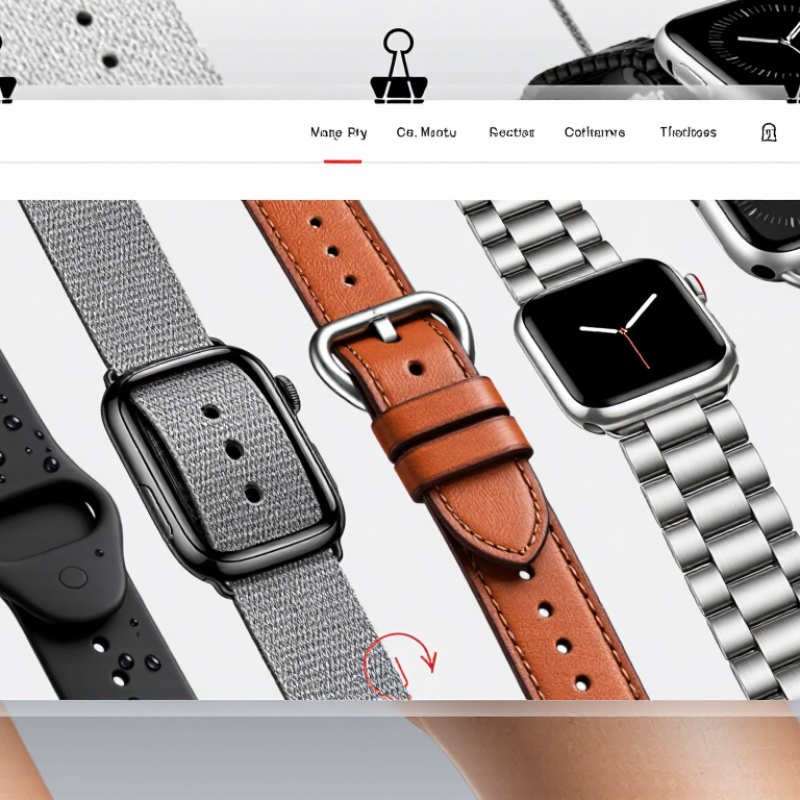
How to Choose Replacement Smartwatch Straps?

Identify Your Watch Model and Confirm the Strap Attachment Type

Before buying a replacement strap, find the exact watch model number in its settings or on the case back. Similar-looking models can use different connector shapes or widths. Check the maker’s fit guide, then inspect the attachment: spring bars, sliding rails, and proprietary connectors are not interchangeable. Measure the gap between the lugs with a ruler or calipers, but don’t rely on a product photo alone. A few millimeters matter. Small detail. Big difference.

The Grand View Research Smartwatch Market report estimated the global market at 33.58 billion dollars in 2023 and projected 8.2% annual growth through 2030. IDC’s 2024 wearable-device forecast projected 537.9 million shipments that year. These figures describe a large, varied market; they do not mean straps share one fitting standard. Before checkout, compare the model, connector, and stated strap width. Check that the attachment sits flush and locks without force. If it wiggles, stop and recheck compatibility. This step is easy to rush, and I’d give it one more look.

Measure Lug Width in Millimetres; NIST Defines 1 Inch as 25.4 mm

How to Choose Replacement Smartwatch Straps?

Measure Lug Width in Millimetres; NIST Defines 1 Inch as 25.4 mm

Replacement strap fit begins at the lugs, where the band joins the watch case. Measure the inner width in millimetres, not the strap’s outer edge. NIST defines one inch as exactly 25.4 millimetres, so a 0.75-inch gap converts to 19.05 mm. Even a small mismatch can matter: a strap that is too wide may not fit, while a narrow one can shift. Digital callipers are more precise than a paper ruler.

IDC’s Worldwide Quarterly Wearable Device Tracker reported 534.6 million wearable-device shipments in 2024. That broad market includes many shapes and attachment systems, so shipment numbers cannot confirm compatibility. Check the watch’s stated lug width, then compare it with the case itself. Some models have recessed connectors or unusual fittings. Strap length matters too. A secure fit should not leave a deep red mark. Small details count.

Compare Strap Materials by Comfort, Activity, Durability, and Care

Choosing a replacement smartwatch strap starts with the hours you will wear it, not just how it looks. Silicone is flexible, lightweight, and easy to rinse after a sweaty walk or workout. It suits frequent activity, though some finishes feel sticky against warm skin. Check that the strap and watch are suitable for water before swimming.

Nylon and other woven fabrics feel softer and allow airflow, which can help on long, warm days. They may absorb sweat or take time to dry, so regular washing matters. A damp strap left in a gym bag can develop an unpleasant smell. Small trade-off. Leather feels smooth and works well for office wear, but sweat and repeated soaking can stain or stiffen it. Wipe it gently and let it dry away from direct heat.

For rough daily use, inspect the buckle, stitching, and attachment points; weak hardware can fail before the material wears out. Measure your wrist and confirm the strap’s connector size before ordering. A comfortable fit should stay secure without leaving deep marks. These details are easy to overlook, and I would not assume that a softer strap is always the more comfortable one. Skin sensitivity, heat, and fit change the experience.

How to Choose Replacement Smartwatch Straps

Compare common strap materials by comfort, activity suitability, durability, and ease of care.

Scores are general, qualitative guidance—not laboratory measurements. Comfort and durability can vary with strap construction, fit, finish, and use. Leather generally needs more careful handling around water; silicone and nylon are typically easier to clean.

Assess Skin-Contact Claims Using ISO 10993’s Biological-Evaluation Framework

When choosing replacement smartwatch straps, treat “hypoallergenic” as a claim to check, not proof of safety. ISO 10993-1 provides a risk-based framework for evaluating biological effects. Its 2018 edition categorizes contact as limited (up to 24 hours), prolonged (over 24 hours to 30 days), or long-term (over 30 days). A strap worn daily may involve extended exposure, especially when sweat and friction build beneath it.

Ask whether the report covers the finished strap, including its coating, dye, and skin-facing surface. A raw-material test may not represent the clasp or the finished product. ISO 10993-5 addresses cytotoxicity; ISO 10993-10 covers sensitization; and ISO 10993-23 covers irritation. The applicable tests depend on the product’s materials, exposure, and risk assessment. Details matter.

A passing result is not a universal guarantee. ISO 10993 is a medical-device evaluation framework, not an automatic consumer-strap certification. Look for the test method, sample description, laboratory, and date—not just an “ISO tested” badge. If a strap leaves a persistent red line after a warm, sweaty afternoon, stop wearing it and reassess. Even careful testing cannot predict every person’s reaction.

How to Choose Replacement Smartwatch Straps? - Assess Skin-Contact Claims Using ISO 10993’s Biological-Evaluation Framework
Strap material or construction Skin-contact considerations ISO 10993 contact assessment Biological endpoints to consider Evidence to request How to interpret a skin-safety claim
Silicone elastomer Formulations and manufacturing processes vary. Colorants, additives, residues, surface coatings, and cleaning agents can affect the finished strap. Usually considered a surface device contacting intact skin. Determine contact duration from the intended wear pattern, including repeated use. Risk-based assessment may consider cytotoxicity, skin irritation, and skin sensitization. Chemical characterization may help identify relevant constituents and potential exposure. Material and formulation information; details of colorants and coatings; manufacturing and cleaning controls; biological evaluation for the finished strap or a justified representative material. “Silicone” alone does not establish that a strap is safe for every wearer. Look for evidence covering the actual formulation and finished product.
Thermoplastic polyurethane (TPU) TPU grades differ in chemistry and additives. Sweat, friction, wear, and cleaning may influence exposure to substances at the skin-contact surface. Classify according to the intended contact site and duration, rather than assuming a category from the material name. Consider irritation, sensitization, and cytotoxicity where relevant to the risk assessment. Review chemical constituents and possible degradation or wear-related exposure when appropriate. Grade and formulation details; information on coatings, pigments, and processing aids; applicable chemical or biological evaluation data for the finished construction. A claim such as “hypoallergenic” is not a substitute for product-specific evidence and does not guarantee that an individual will not react.
Fluoroelastomer The term describes a family of elastomers, not one uniform formulation. Surface treatments, pigments, additives, and production residues may vary. Assess as a skin-contacting surface device when that reflects the intended use. Consider the expected frequency and cumulative pattern of wear. Evaluate the relevant biological risks using a risk-based approach, potentially including irritation, sensitization, cytotoxicity, and chemical characterization. Identification of the specific material formulation; supplier information; process controls; and biological evaluation linked to the finished strap or a technically justified equivalent. A material-family name or general statement about the polymer is not proof that a particular strap has been evaluated.
Leather or coated leather Tanning agents, dyes, finishes, adhesives, and coatings can differ. Moisture and repeated skin contact may affect the contact surface. Assess the complete skin-contacting construction, including finishes and coatings, for the intended use and duration. Consider irritation and sensitization risks, as well as chemical constituents relevant to the specific materials and manufacturing process. Information on tanning, dyes, coatings, and adhesives; restricted-substance or chemical test results where relevant; evaluation of the finished strap. “Natural leather” does not by itself establish biological safety; processing chemicals and surface treatments also matter.
Nylon or other textile webbing Fibers, dyes, finishes, elastic components, and stitching may all contact skin. Sweat, friction, and cleaning can affect wear comfort and surface condition. Assess the skin-contacting textile and any other exposed components. Determine duration based on intended wear, not just the time of a single fitting. Consider irritation and sensitization risks from dyes, finishes, or other constituents. Mechanical comfort and moisture management are separate from biological evaluation. Fiber and finish information; dye and treatment details; cleaning instructions; relevant testing or evaluation for the complete strap construction. “Breathable” or “quick-drying” describes a performance feature, not evidence that the strap has passed a biological evaluation.
Metal links, mesh, or buckle that touches skin Alloy composition, plating, coatings, wear, and corrosion can affect skin exposure. A buckle or clasp may create a different contact area from the strap itself. Include every component that can contact skin in the assessment. Consider the condition of the surface during intended use. Consider sensitization and irritation risks; chemical characterization or metal-release information may be relevant to the risk assessment. Alloy and coating specifications; evidence addressing wear or corrosion where relevant; product-specific evaluation of skin-contacting components. “Stainless steel” or “nickel-free” should be supported by clear specifications or suitable test evidence; alloy names alone may not describe exposure from the finished component.
Framework note: ISO 10993-1 provides a risk-based framework for biological evaluation of medical devices, including consideration of contact type and duration. Its use does not automatically mean a consumer smartwatch strap is “ISO certified,” nor does the framework prescribe the same tests for every product. For an appropriate evaluation, consider the finished device, intended use, materials, manufacturing residues, and available chemical and biological evidence. ISO 10993-5 addresses in-vitro cytotoxicity; ISO 10993-10 addresses skin sensitization; and ISO 10993-23 addresses irritation. Confirm the applicable editions and regulatory requirements for the product and market.

Check Strap Water-Care Limits Separately from Watch Ratings (ISO 22810:2010)

A watch’s water-resistance rating does not automatically cover its replacement strap. ISO 22810:2010 concerns water resistance of the watch, not a universal water-care rating for every strap attached to it. Keep that distinction in mind.

A watch may tolerate splashes while its leather strap absorbs water, darkens, or stiffens as it dries. Some fabric straps hold moisture against the skin, while certain coatings or adhesives may also need gentle care.

Check the strap maker’s care guidance separately, especially if you swim, exercise, or wash your hands often. Look for clear instructions about rinsing, drying, and exposure to soap or salt water. No care label? Treat the material cautiously, and let a damp strap air-dry away from direct heat.

Also inspect the attachment points after changing straps; a secure fit matters, but it does not improve the watch’s water resistance.

It is tempting to assume a “water-friendly” strap makes the whole setup suitable for swimming. That assumption can be wrong.

Even a tested watch rating depends on the watch’s condition and proper use, so follow its own manual too.

FAQS

How do I measure the width for a replacement strap?

Measure between the inner lug walls in millimetres. Measure twice.

Can I use a paper ruler for an accurate measurement?

Digital callipers are usually more precise. A paper ruler can miss a small difference.

How many millimetres are in three-quarters of an inch?

Three-quarters of an inch equals 19.05 millimetres. Small gaps matter.

Is matching the lug width enough to confirm a strap will fit?

No. Check the connector shape and pin diameter too. Some fittings are recessed or unusual.

How can I tell whether a strap fits comfortably?

Check the clasp position and move your wrist before wearing it all day. A deep red mark suggests the fit may be too tight.

Does a watch’s water-resistance rating apply to its replacement strap?

Not necessarily. The watch rating does not set care limits for every strap material.

How should I care for a damp strap?

Follow its care instructions for rinsing and drying. Without a care label, let it air-dry away from direct heat.

Can I assume a water-friendly strap is suitable for swimming?

No. Check the strap guidance and the watch manual separately. I might be overcautious, but that distinction is easy to miss.

Conclusion

Choosing Replacement Smartwatch Straps starts with identifying your watch model and confirming how the strap attaches. A strap that looks similar may not fit if its connector type differs. Next, measure the lug width in millimetres so you can select the correct size. If you have a measurement in inches, NIST defines one inch as exactly 25.4 millimetres, making conversion straightforward.

Consider how the strap will feel and perform in your daily routine. Silicone or other easy-care materials may suit exercise, while woven or leather-like options can offer a different feel but may need more careful cleaning. Check comfort, durability, and care instructions, especially for frequent wear. Treat skin-contact claims as something to assess carefully: ISO 10993 provides a framework for biological evaluation, but a general reference to the standard does not prove that every strap is suitable for every wearer. Finally, check the strap’s own water-care limits separately from the watch’s water-resistance rating, which is addressed by ISO 22810:2010.


Elara

Elara

Elara is a seasoned marketing professional with a strong understanding of product strategy, customer needs, and digital communication. As a valued member of the company, Elara combines market insight with extensive product knowledge to create clear, practical, and engaging content for readers......