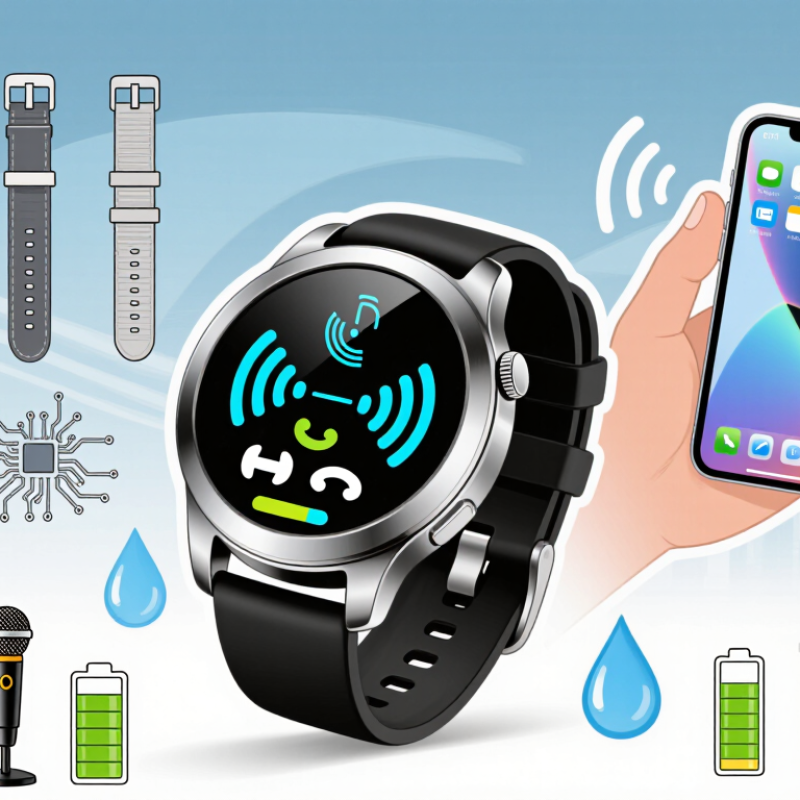
| Bluetooth Calling Function |
Bluetooth calling through a built-in microphone and speaker; most models support call answering, dialing, call history, and contact synchronization. |
Call interface, dial pad layout, contact capacity, ringtone settings, language options, and microphone or speaker configuration can usually be adjusted. |
Included in the product configuration; hardware changes may add approximately 7–15 days to development. |
Request a live call test, microphone clarity test, speaker-volume test, and verification of connection stability at normal indoor distances. |
| Bluetooth Compatibility |
Commonly compatible with Android and iOS smartphones through Bluetooth and a companion application. Compatibility depends on the chipset and application version. |
Application logo, interface language, onboarding screens, notification rules, and selected health-data displays may be customized. |
Basic software branding may require approximately 2–4 weeks; extensive application changes may require a longer development schedule. |
Test recent Android and iOS versions, notification delivery, incoming-call alerts, music controls, and reconnection after signal loss. |
| Display |
Common configurations include 1.28–2.05 inch color displays, with LCD or AMOLED options depending on the model and target price. |
Watch-face design, menu layout, boot animation, screen shape, brightness settings, and touch sensitivity can be specified. |
Display upgrades can increase unit cost by approximately US$2–US$8, depending on size, resolution, and panel type. |
Confirm screen resolution, brightness in outdoor conditions, viewing angle, touch response, and dead-pixel inspection standards. |
| Battery and Charging |
Typical battery capacities range from approximately 180 mAh to 500 mAh. Usage time varies with calling frequency, display brightness, and health monitoring features. |
Charging method, magnetic charging-pin position, battery capacity, battery icon design, and low-battery warnings may be customized. |
Typical charging time is approximately 1.5–3 hours. A higher-capacity battery may add approximately US$0.50–US$2 per unit. |
Request measured standby time, normal-use time, continuous-call time, charging-cycle results, and battery-safety documentation. |
| Health and Fitness Features |
Common features include step counting, heart-rate monitoring, sleep tracking, blood-oxygen estimation, sports modes, and sedentary reminders. |
Feature visibility, measurement intervals, sports-mode selection, data units, and health-screen presentation may be configured. |
Standard functions are generally included. Additional sensors or algorithm development may add approximately US$1–US$6 per unit. |
Ensure that health readings are presented as wellness estimates rather than medical diagnoses unless the product has the required medical approvals. |
| Materials and Protection |
Common materials include zinc alloy, aluminum alloy, ABS, polycarbonate, silicone, and tempered glass. Many models advertise splash or water resistance. |
Case color, strap material, strap width, buckle style, button design, surface finish, and packaging materials can be customized. |
Private-color or material adjustments commonly require approximately 7–20 days. Tooling for a new case design may cost approximately US$1,500–US$8,000. |
Verify the exact protection rating, test method, sealing design, temperature range, and whether the rating applies to swimming or only everyday splashes. |
| Branding and Packaging |
Available options commonly include logo printing, laser engraving, custom watch faces, user manuals, retail boxes, inserts, and barcode labels. |
Packaging can be tailored to target-market language, retail dimensions, color requirements, accessories, and regulatory markings. |
Basic logo customization may add approximately US$0.10–US$1.00 per unit. Custom packaging commonly adds US$0.30–US$2.50 per unit. |
Approve artwork files, color references, print samples, barcode format, carton markings, and packaging drop-test requirements. |
| Indicative Unit Pricing |
Entry-level Bluetooth calling models commonly fall around US$12–US$25 per unit. Mid-range configurations often fall around US$25–US$50 per unit. |
Pricing changes with display type, chipset, sensor selection, battery size, materials, software work, packaging, and order quantity. |
Indicative factory pricing is normally quoted before freight, taxes, tooling, certification, application development, and payment fees. |
Compare quotations using the same specification sheet and request separate prices for samples, tooling, software customization, packaging, and mass production. |
| Minimum Order Quantity |
Stock or standard models may be available from approximately 50–500 units. Customized colors, packaging, or software commonly require approximately 500–3,000 units. |
Lower quantities may be possible with standard components, while new molds and custom electronics usually require higher commitments. |
MOQ may be reduced for repeat orders or standard inventory, but the unit price may increase at lower quantities. |
Confirm MOQ separately for the watch, strap color, logo, packaging, application customization, and replacement parts. |
| Sample and Development Process |
A standard sample is commonly used to verify hardware, calling performance, application pairing, appearance, and packaging feasibility. |
Customized samples may include a logo, selected color, custom watch face, packaging draft, and localized application content. |
Standard samples often take approximately 3–7 working days. Customized samples commonly take approximately 7–20 working days. |
Obtain a written sample approval record covering appearance, functions, firmware version, application version, and approved materials. |
| Mass-Production Lead Time |
For an approved standard model, typical production time is approximately 15–30 working days after deposit and final confirmation. |
New tooling, customized firmware, application changes, special colors, and certification work can extend the schedule. |
New product development may require approximately 45–90 days, excluding certification and shipping time. |
Request a milestone schedule covering deposit, component procurement, pilot production, inspection, packing, and shipment release. |
| Quality Control |
Standard checks may cover appearance, charging, Bluetooth pairing, calling, touch response, buttons, sensors, battery level, and packaging. |
Inspection criteria can be documented through an approved sample, defect classification, AQL levels, and functional test procedures. |
Third-party pre-shipment inspection commonly costs approximately US$200–US$500 per inspection day, depending on location and scope. |
Define acceptable cosmetic defects, functional-failure limits, carton quantity, sampling level, and corrective-action procedures before production. |
| Compliance and Documentation |
Depending on the destination market, documentation may include EMC, radio, safety, battery transport, chemical, recycling, and packaging compliance records. |
Labels, manuals, declarations, country-specific icons, and product files may be prepared for the intended sales region. |
Certification costs vary widely by market and test scope; allow approximately 2–8 weeks for many standard testing projects. |
Confirm whether existing reports apply to the exact model, firmware, battery, radio module, and importer or seller requirements. |
| Shipping and Delivery |
Common options include express courier, air freight, rail, and sea freight. Delivery time depends on destination, customs, season, and shipping method. |
Carton dimensions, palletization, shipping marks, delivery terms, and split shipments can be arranged according to the purchasing plan. |
Typical international transit ranges are approximately 3–7 days by express, 5–12 days by air, and 25–45 days by sea, excluding customs clearance. |
Compare EXW, FOB, CIF, and DDP quotations carefully, and confirm who handles duties, import clearance, insurance, and last-mile delivery. |
| Warranty and After-Sales Support |
A common commercial warranty period is 12 months for manufacturing defects, subject to the agreed warranty terms. |
Support may include replacement parts, repair instructions, firmware updates, application troubleshooting, and spare-unit arrangements. |
Warranty terms should define response time, evidence requirements, return responsibility, replacement policy, and credit or refund conditions. |
Agree on a written warranty policy before placing the order and keep records of batch numbers, defect rates, and service cases. |
| Best-Fit Supplier Profile |
The most suitable supplier is one that can consistently meet the required calling performance, application compatibility, quality level, compliance needs, MOQ, and delivery schedule. |
Prioritize suppliers with documented customization workflows, stable component sourcing, firmware support, application maintenance, and transparent production controls. |
Overall landed cost should include unit price, tooling, customization, certification, inspection, freight, taxes, and after-sales reserves. |
Use a weighted scorecard rather than unit price alone: product performance, quality, customization capability, compliance, communication, lead time, and total landed cost. |