Choosing a reliable Kids Gaming Smartwatch supplier requires more than comparing colorful product photos. Global buyers must examine product quality, factory experience, testing records, communication, and after-sales support. A watch may look attractive online, yet its battery could fail after one school day. Its buttons may also feel difficult for smaller hands.
This guide introduces ten suppliers serving international buyers. Each supplier is considered through practical sourcing factors, including manufacturing capability, customization options, minimum order quantities, delivery performance, and product consistency. Attention is also given to age-appropriate games, screen visibility, charging design, water resistance, parental controls, and data protection practices. These details matter when a product is used on a child’s wrist every day.
Evidence matters.
The selection does not rely only on supplier claims. Buyers should request samples, review test reports, inspect packaging, and confirm applicable safety requirements before placing large orders. Clear communication is equally important, especially when discussing firmware, languages, app functions, warranty terms, and replacement parts. A dependable supplier should explain limitations instead of promising everything.
No supplier is perfect. Pricing, software stability, customization speed, and production capacity can change between orders. A smartwatch that performs well in one market may need adjustments elsewhere. This overview offers a practical starting point, not a substitute for independent verification. By comparing these ten suppliers carefully, buyers can reduce sourcing risks and choose a Kids Gaming Smartwatch partner that supports quality, compliance, and long-term customer trust.
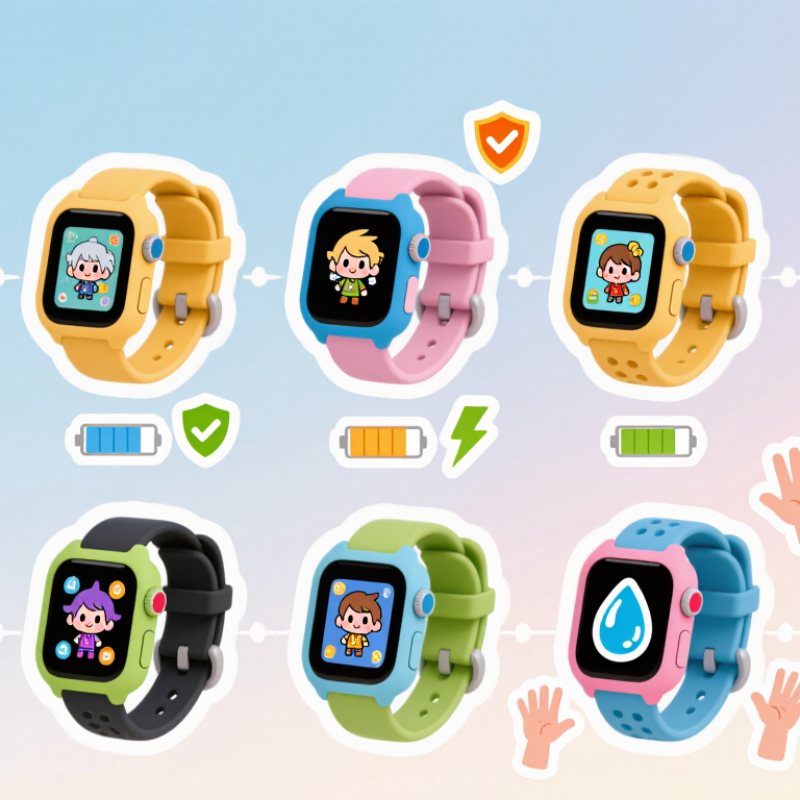
Kids gaming smartwatches combine child-focused communication, location features, health tracking, and simple interactive games. They usually include a touchscreen, step counter, camera, alarms, and parent-managed controls. Gaming should mean more than colorful menus. It may include puzzles, movement challenges, learning tasks, or reward-based activities. A screen alone does not create meaningful play.
The category sits between wearables, children’s electronics, and mobile gaming. Grand View Research valued the global smartwatch market at about 33.6 billion US dollars in 2023. It also projects strong growth through 2030. Newzoo’s 2024 Global Games Market Report estimated 3.42 billion players worldwide and 187.7 billion US dollars in game revenue. These figures show broad demand for connected play, but they do not measure children’s gaming watches directly. That distinction matters.
The market remains difficult to define. Many suppliers classify basic activity bands as gaming products. That can mislead global buyers. A reliable evaluation should examine battery performance, network compatibility, data protection, age suitability, and parental settings. Research from the International Data Corporation continues to track wearables by device type, but child-specific gaming data remains limited. This is a weakness. Suppliers should provide clear test results, software update policies, and regional compliance documents. In real use, a child may prefer a simple racing game over ten complicated features. Practical design often wins.
| Rank | Anonymous Supplier Profile | Primary Manufacturing Focus | Typical Product Positioning | Common Display and Gaming Hardware | Connectivity and Safety Functions | Typical Battery and Protection | Typical MOQ Range | Common Lead Time | Target Global Buyer | Key Compliance Documentation to Request |
|---|---|---|---|---|---|---|---|---|---|---|
| 1 | Profile A: Full-Feature OEM Supplier | Consumer electronics and children’s wearable devices | Mass-market GPS gaming smartwatch with private-label customization | 1.4–1.8 inch color touchscreen; step counter; motion-based games; camera on selected models | 4G LTE or 2G/4G variants; GPS, Wi-Fi and Bluetooth; SOS calling; geofencing; parental application | 500–800 mAh battery; approximately 1–3 days of normal use; IPX5–IP67 protection depending on model | 500–1,000 units | 25–45 days after sample approval | Retailers, e-commerce sellers and regional distributors | CE, RED, RoHS, REACH, UN38.3, IEC 62368-1 test evidence and battery transport documents |
| 2 | Profile B: Education-Focused Supplier | Educational electronics and child-oriented interactive devices | Learning, activity and light-gaming smartwatch for school-age children | 1.3–1.7 inch display; arithmetic, memory and reaction games; pedometer; alarm and calendar | Bluetooth or cellular versions; optional GPS; restricted-contact list; school-mode settings | 400–700 mAh battery; usually 1–3 days of use; splash-resistant housing commonly offered | 300–800 units | 20–40 days | Schools, education distributors, gift retailers and family-product stores | CE or FCC market evidence, RoHS, REACH, charger safety reports and privacy documentation for the companion app |
| 3 | Profile C: GPS Safety Supplier | Location-enabled wearables and personal safety electronics | Safety-first smartwatch with games as a secondary feature | 1.4–1.8 inch touchscreen; simple built-in games; activity tracking; optional voice messages | 4G LTE; GPS, Wi-Fi positioning and cellular location; SOS key; two-way calling; safe-zone alerts | 500–900 mAh battery; approximately 1–2 days with frequent location updates; IP67 commonly specified | 500–1,500 units | 30–50 days | Telecom resellers, safety-product distributors and family-service providers | Radio-frequency reports, CE or FCC, carrier-band compatibility, SAR information, RoHS, REACH and UN38.3 |
| 4 | Profile D: Gaming-Oriented Supplier | Interactive toys, handheld electronics and gaming accessories | Entertainment-led smartwatch with casual games and collectible functions | 1.4–2.0 inch color display; motion sensors; touch games; countdown challenges; camera or music on selected models | Bluetooth; optional Wi-Fi or cellular connectivity; parental controls; contact restrictions; no open social feed by default | 450–800 mAh battery; approximately 1–3 days; IPX4–IP67 options | 1,000–3,000 units | 30–60 days | Toy importers, gaming retailers, promotional merchandise buyers and online sellers | Toy and electronics safety testing, CE, FCC where applicable, RoHS, REACH, battery safety and age-grade assessment |
| 5 | Profile E: Sports and Activity Supplier | Fitness trackers and sports-oriented wearable electronics | Activity, exercise and gamified fitness smartwatch for children | 1.2–1.7 inch display; step count; movement goals; timer; pedometer-based reward games | Bluetooth synchronization; optional GPS; basic emergency contact feature; no-call versions available | 150–500 mAh battery; approximately 3–7 days for basic tracking; water resistance varies by model | 500–2,000 units | 20–45 days | Sports retailers, school programs, wellness brands and activity-product distributors | CE or FCC, RoHS, REACH, battery test reports, ingress-protection test report where an IP rating is claimed |
| 6 | Profile F: Entry-Level Private-Label Supplier | High-volume electronic accessories and basic smart devices | Affordable smartwatch with simple games and essential tracking functions | 1.3–1.6 inch display; basic touch games; pedometer; alarm; stopwatch; calculator on selected models | Bluetooth or 2G/4G options; limited GPS availability; SOS button may be offered as an upgrade | 300–600 mAh battery; approximately 1–3 days; basic splash resistance is common | 200–1,000 units | 15–35 days | Small importers, startup brands, promotional buyers and test-market sellers | Market-specific electrical safety reports, CE or FCC, RoHS, REACH, battery documentation and packaging compliance |
| 7 | Profile G: Premium Customization Supplier | Wearable technology, industrial design and custom electronics | Higher-quality private-label product with custom software, packaging and accessories | 1.5–2.0 inch display; smoother user interface; motion gaming; camera; voice recording; expanded memory options | 4G LTE, GPS, Wi-Fi and Bluetooth; parental dashboard; remote settings; configurable data permissions | 500–1,000 mAh battery; approximately 1–3 days; IP67 or equivalent protection may be available | 1,000–5,000 units | 45–75 days for significant customization | Established brands, national distributors and subscription-service operators | CE, RED, FCC where applicable, RoHS, REACH, SAR, UN38.3, IEC 62368-1 and software privacy review |
| 8 | Profile H: Regional Telecom-Compatible Supplier | Cellular wearables designed for multiple network markets | Connected children’s smartwatch optimized for local carrier compatibility | 1.4–1.8 inch touchscreen; basic games; camera; activity tracking; voice-message functions | Multi-band 4G LTE; GPS, Wi-Fi and Bluetooth; SOS calling; location sharing; SIM or eSIM options | 500–850 mAh battery; approximately 1–2 days under active cellular use; IP67 commonly requested | 1,000–3,000 units | 35–60 days | Telecom distributors, mobile retailers and connected-device solution providers | Carrier-band test results, CE or FCC, RED, SAR, IMEI or device-identity documentation, RoHS, REACH and UN38.3 |
| 9 | Profile I: Sustainable Materials Supplier | Consumer electronics using recycled, recyclable or reduced-plastic materials | Eco-positioned kids’ smartwatch with activity tracking and age-appropriate games | 1.3–1.8 inch display; low-power interface; step tracking; memory and educational games | Bluetooth-first configuration; optional GPS or cellular module; parental controls; limited data collection design | 300–700 mAh battery; approximately 2–5 days; replaceable strap and recyclable packaging may be offered | 500–2,000 units | 30–55 days | Eco-conscious retailers, school suppliers and sustainability-focused online brands | RoHS, REACH, WEEE-related information, battery recycling data, material declarations, CE or FCC and packaging claims evidence |
| 10 | Profile J: Small-Batch Development Supplier | Rapid prototyping, product development and flexible electronics assembly | Low-volume pilot production for new concepts and regional market testing | 1.2–1.8 inch display; configurable games; sensor-based interaction; modular strap and enclosure choices | Bluetooth or cellular prototypes; GPS available on selected platforms; configurable parental features | 300–800 mAh battery; approximately 1–4 days depending on connectivity and software; protection rating requires model-specific verification | 100–500 units | 25–60 days for pilot batches | Startups, design houses, crowdfunding projects and niche distributors | Prototype safety reports, CE or FCC pre-compliance testing, RoHS, REACH, battery transport documents and software-security review |
It combines child-focused communication, location tools, health tracking, and simple interactive games. A screen alone is not meaningful play.
Suitable options include puzzles, movement challenges, learning tasks, and reward-based activities. A child may prefer one simple racing game.
Treat broad smartwatch and gaming statistics carefully. They show connected-play demand, not exact sales of children’s gaming watches. Definitions vary widely.
Request current laboratory reports for batteries, charging systems, materials, and radio functions. Ask about testing dates and sample conditions. Recycled certificates are not enough.
Look for skin-friendly bands, smooth edges, secure closures, and carefully reviewed detachable parts. Younger children need extra attention. Small parts can become a weakness.
Approve an engineering sample and a written golden sample. Test touch response, charging temperature, button strength, water resistance, and battery performance. Real conditions reveal more.
Games, languages, layouts, packaging, and parental controls can be customized. Each change may affect stability, battery life, or required testing. Customization is not risk-free.
Check regional network compatibility, privacy safeguards, software updates, and parental settings. Requirements differ by destination. Clear documentation is essential.
Review incoming materials, assembly checks, software inspections, and final random testing. A factory tour helps, but it proves little alone. Verify defect data after every shipment. The attractive sample may mislead.
The global market for Kids Gaming Smartwatch products is expanding as families and buyers seek devices that combine age-appropriate entertainment, communication, learning, and basic safety features. Leading suppliers differ in hardware quality, game options, battery performance, durability, connectivity, parental controls, and software flexibility. A careful comparison should also consider screen design, user experience, data protection, after-sales support, production capacity, and the supplier’s ability to serve different regions and order volumes.
For global buyers, selecting the right supplier requires more than comparing prices. Buyers should review product samples, manufacturing consistency, testing procedures, safety documentation, customization capabilities, packaging options, and delivery reliability. Suppliers that follow responsible manufacturing standards and provide transparent compliance information can help reduce purchasing risks. It is also important to assess target users, retail positioning, warranty policies, communication efficiency, and long-term cooperation potential. By evaluating these factors systematically, buyers can choose a dependable partner and develop a Kids Gaming Smartwatch solution that is practical, engaging, safe, and suitable for their intended market.