Global buyers are searching for a Rugged Outdoor Smartwatch that survives real use, not merely attractive product photography. Supplier selection now involves durability, sensor accuracy, battery performance, software support, and responsible manufacturing. A watch may look tough on a desk yet fail after rain, dust, repeated impacts, or freezing mornings.
Ray Maker, a respected sports-technology reviewer, often emphasizes this practical principle: “Buy for the activities you actually do, not the features you imagine using.” That advice matters when comparing global suppliers. A hiking guide may need reliable GPS and offline maps. A construction supervisor may value impact resistance, readable displays, and long battery life. A trail runner may prioritize lightweight comfort and accurate heart-rate tracking.
Real performance leaves clues. Look for clear testing data, water-resistance documentation, operating-temperature ranges, warranty terms, and responsive technical support. Certifications should be verifiable. Marketing language alone is not enough.
Supplier transparency matters too. Buyers should examine factory experience, quality-control procedures, sample consistency, and after-sales service. A low quotation can become expensive when replacement parts arrive late or firmware support disappears. That risk is easy to underestimate.
The market is not perfect. Some brands still overstate battery life under ideal conditions. Others publish impressive specifications without explaining testing methods. Careful buyers should ask uncomfortable questions and compare independent evidence.
This guide introduces leading Rugged Outdoor Smartwatch suppliers for international purchasing teams. It focuses on practical capability, product reliability, customization options, compliance awareness, and long-term business value. The strongest supplier is not always the cheapest. It is the one that performs consistently when conditions become difficult.
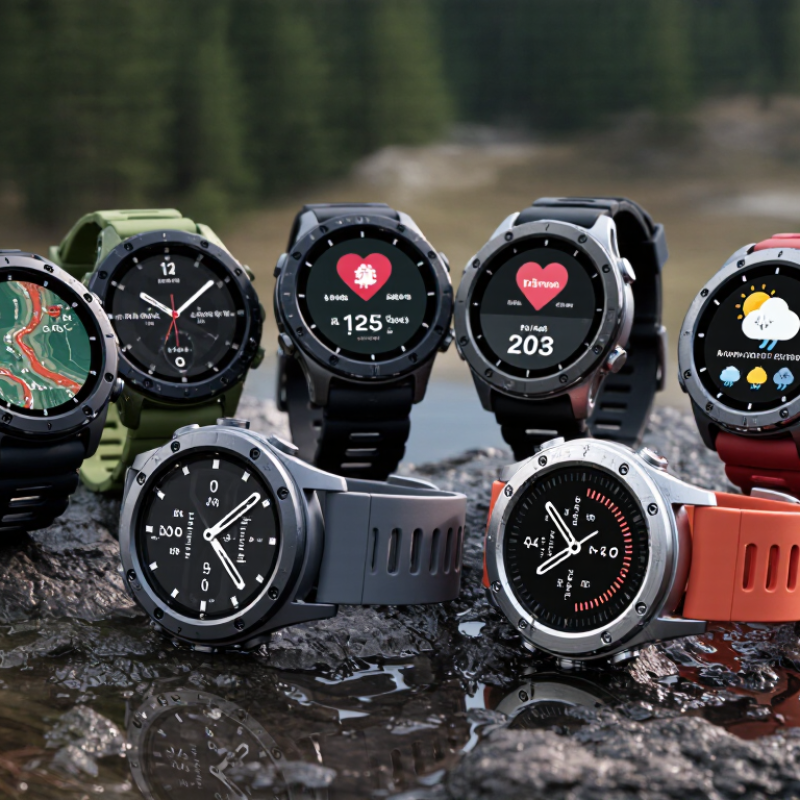
A rugged outdoor smartwatch is a wearable built for demanding movement, changing weather, and frequent impacts. Unlike ordinary lifestyle watches, it combines timekeeping, health tracking, navigation, and communication in a reinforced body. Its value is practical, not merely visual. A thick case, raised bezel, and scratch-resistant display help protect the screen against rocks, tools, and accidental drops. Many models use sealed construction to resist rain, sweat, dust, and brief water exposure. However, “waterproof” should not be treated as unlimited protection. Ratings describe test conditions, not every real adventure. This distinction matters to global buyers evaluating product claims.
Core features usually include multi-system positioning, a readable display, altitude and barometric data, compass functions, and route recording. Reliable heart-rate tracking can support training, but wrist sensors may lose accuracy during rapid motion or cold conditions. Battery endurance is another defining feature. A useful outdoor model should last several days in normal use and remain practical with frequent location tracking. Physical buttons are valuable when gloves, mud, or rain make touch controls unreliable. Strong vibration alerts, emergency location sharing, and offline maps can improve field awareness, subject to regional service limits.
From a sourcing perspective, buyers should inspect test reports, battery cycles, sealing methods, and repair procedures. Ask how accuracy was measured. Ask what happens after a cracked screen. No design is truly indestructible. Weight, charging speed, software stability, and replacement parts also affect long-term value. Some rugged watches look capable but feel uncomfortable after six hours of hiking. Hands-on trials often reveal that weakness.
For global buyers, evaluating a rugged smartwatch supplier requires more than checking a product catalogue. Start with evidence from real outdoor use: cold starts, wet trails, dust exposure, and repeated drops. Ask for test reports, sample logs, and clear explanations of testing conditions. An impressive rating means little when laboratory methods remain unclear. Inspect the case, buttons, charging contacts, and strap after several sample cycles. Small details matter.
Supplier capability should match your target market and order volume. Review production capacity, minimum order quantities, lead times, and quality-control checkpoints. Request a pre-production sample with the exact sensors, firmware, packaging, and language settings. Confirm battery results using a stated GPS schedule, screen brightness, and temperature range. Ask how defects are recorded and replaced, not merely how they are advertised. This is where trust becomes measurable.
For international purchasing, verify applicable safety, radio, battery, recycling, and data requirements in each destination. A capable supplier should provide current documents and identify who maintains them. Check firmware support, security updates, spare-part access, and response times after shipment. Independent factory audits can reveal cramped storage, inconsistent inspection, or rushed assembly. Do not judge everything from one perfect sample. I would also record unanswered questions, because hesitation can become a costly delay. Suppliers may improve after feedback, but buyers need proof, not promises.
This indicative sourcing scorecard prioritizes the capabilities global buyers typically verify before approving a rugged outdoor smartwatch supplier. The weights total 100% and can be adjusted for a specific product program.
How to use it: Compare suppliers against the highest-weighted areas first, then validate test reports, battery claims, GNSS performance, production capacity, quality systems, warranty processes, and international shipping readiness.
Rugged outdoor smartwatch suppliers generally fall into four categories: OEM factories, ODM developers, specialized component makers, and final assembly partners. OEM factories follow buyer specifications, while ODM teams offer existing platforms that shorten development time. Component suppliers may produce optical sensors, reinforced glass, battery modules, or waterproof connectors. Assembly partners combine these parts, install firmware, and manage packaging for international distribution.
Manufacturing capability matters more than a polished catalog. Look for CNC machining, double-shot injection molding, gasket installation, and controlled adhesive bonding. These processes support durable cases and stable sealing around buttons, charging ports, and sensors. Reliable suppliers should also perform drop tests, temperature cycling, sweat exposure, vibration checks, and water-resistance testing. Ask for test records, sampling procedures, and traceability for each production batch.
Experience shows that small details often cause field failures. A loose crown, weak strap pin, or poorly calibrated altitude sensor can damage user confidence. Suppliers with in-house engineering can adjust housing tolerances and improve firmware during pilot production. However, a perfect supplier rarely exists. Some factories offer strong tooling but limited software support. Others provide excellent development skills but depend on outside component vendors. Buyers should inspect production lines, review sample data, and test devices in rain, dust, cold mornings, and direct sunlight before approving volume orders. Fancy promises are not evidence.
Comparative industry guide for global buyers. The figures below represent common manufacturing ranges and capabilities for private-label and OEM rugged outdoor smartwatch suppliers; final specifications depend on product design, testing requirements, order volume, and destination-market regulations.
| Supplier Category | Typical Buyer Profile | Core Manufacturing Capabilities | Common Housing and Protection | Typical Water-Resistance Target | Outdoor Hardware Options | Typical Battery Range | Quality and Compliance Support |
|---|---|---|---|---|---|---|---|
| OEM/ODM Wearable Electronics Manufacturer | Established distributors, sporting-goods companies, and private-label buyers requiring customized hardware and software. | Industrial design, PCB assembly, firmware customization, tooling, injection molding, automated assembly, functional testing, and mass production. | Glass-fiber-reinforced polymer, aluminum alloy, stainless steel, silicone, TPU, and chemically strengthened cover glass. | 5 ATM to 10 ATM | Multi-band or standard GNSS, optical heart-rate sensing, compass, barometer, accelerometer, gyroscope, and temperature sensing. | Approximately 7–21 days in smartwatch mode; longer in low-power or watch-only modes. | Production quality systems commonly aligned with ISO 9001; support for regional radio, safety, battery, and substance-compliance testing. |
| GPS Sports-Watch Specialist | Outdoor sports retailers, endurance-sports brands, trekking channels, and buyers targeting navigation-focused users. | GNSS antenna tuning, route-navigation software, activity algorithms, sensor integration, waterproof assembly, and outdoor performance validation. | Polymer or metal bezel, reinforced polymer case, sealed buttons, silicone or nylon straps, and scratch-resistant display covers. | 5 ATM to 10 ATM | GPS/Galileo/GLONASS/BeiDou support may be available; altimeter, barometer, compass, route tracking, cadence, and training metrics. | Approximately 10–30 days, depending on GNSS use, display type, and sensor activity. | Support may include GNSS performance testing, water-resistance testing, drop testing, display testing, and battery-cycle evaluation. |
| Rugged Industrial and Field-Use Supplier | Construction, logistics, utilities, security, inspection, and field-service buyers needing enhanced durability. | Impact-resistant enclosure design, sealing, glove-friendly controls, high-temperature assembly processes, small-batch customization, and durability testing. | Thick polymer or metal case, reinforced bezel, sealed charging interface, replaceable strap system, and raised screen protection. | 5 ATM to 10 ATM | GNSS, motion sensors, emergency contact functions, vibration alerts, environmental sensors, and configurable data collection. | Approximately 5–14 days under normal connected use; optimized firmware can extend standby time. | Common tests include drop, vibration, button-life, ingress, temperature-cycle, and charging-safety tests. Formal ratings require documented laboratory testing. |
| High-Volume Consumer Electronics Factory | Large importers, chain retailers, e-commerce operators, and buyers prioritizing cost efficiency and scalable output. | High-speed SMT lines, automated assembly, standardized component sourcing, packaging customization, production traceability, and capacity planning. | Injection-molded polymer, standard aluminum trim, tempered or strengthened glass, and mass-produced silicone straps. | Commonly 3 ATM to 5 ATM; higher ratings require dedicated sealing design and testing. | Basic GNSS, heart-rate monitoring, accelerometer, sleep tracking, notifications, Bluetooth connectivity, and sports modes. | Approximately 3–14 days, depending on screen brightness, connectivity, GNSS, and health-sensing frequency. | Strongest fit for repeat orders and standardized products; buyers should verify supplier controls for battery cells, chargers, firmware, and waterproof seals. |
| Low-MOQ Private-Label Assembly Supplier | Start-ups, niche outdoor brands, regional distributors, and buyers validating demand before a larger launch. | Existing-platform customization, logo and packaging changes, strap replacement, firmware parameter adjustment, sample production, and small-batch assembly. | Pre-existing polymer or metal housings with limited options for colors, bezels, straps, and display graphics. | Typically 3 ATM to 5 ATM, subject to the original platform design. | Usually standard activity tracking, heart-rate monitoring, Bluetooth notifications, sleep tracking, and selected sports modes. | Approximately 3–10 days in normal use. | Faster commercialization, but buyers should request test reports, production samples, component declarations, and a clear warranty process. |
| Specialized Health and Fitness Wearable Supplier | Fitness platforms, wellness distributors, gyms, coaching services, and buyers focused on biometric and training data. | Optical sensor integration, algorithm tuning, app synchronization, data validation, firmware updates, and user-interface customization. | Lightweight polymer, aluminum accents, optical sensor window, flexible elastomer strap, and sweat-resistant construction. | Commonly 3 ATM to 5 ATM | Heart rate, blood-oxygen estimation, sleep metrics, accelerometer, gyroscope, workout modes, and selected recovery indicators. | Approximately 4–14 days, depending on continuous sensing and display usage. | Biometric functions should be marketed according to validated performance and local regulations; wellness features are not automatically medical devices. |
| Premium Materials and Design-Focused ODM | Premium lifestyle, adventure, fashion-outdoor, and specialty retail buyers seeking distinctive industrial design. | Custom enclosure engineering, CNC or die-cast metal parts, surface finishing, display integration, premium packaging, and controlled pilot production. | Aluminum alloy, stainless steel, titanium options, sapphire or strengthened glass options, ceramic finishes, and premium elastomer or leather alternatives. | 5 ATM to 10 ATM | GNSS, compass, barometer, altimeter, health sensors, AMOLED or memory-in-pixel displays, and configurable physical controls. | Approximately 5–20 days, depending on display technology, sensors, and connectivity profile. | Suitable for design differentiation and material traceability; buyers should confirm corrosion, coating, scratch, ingress, and drop-test requirements. |
| Regional Compliance and Localization Partner | Global buyers entering multiple markets with country-specific packaging, language, software, and regulatory needs. | Firmware localization, multilingual packaging, charger adaptation, documentation, sample coordination, regulatory-file preparation, and after-sales support setup. | Usually based on an existing rugged smartwatch platform selected for the target market. | Depends on the selected platform and verified test documentation. | Localized map or navigation support, regional time zones, language packs, mobile-app integration, and market-specific connectivity settings. | Depends on the selected platform and software configuration. | Can coordinate testing for radio equipment, electrical safety, battery transport, electromagnetic compatibility, and restricted substances; certificates must be verified for the exact model. |
For global buyers, rugged outdoor smartwatches need more than thick cases and bright screens.
IDC’s Worldwide Quarterly Wearable Device Tracker recorded 520.7 million wearable shipments in 2023, increasing pressure on suppliers to prove consistent quality.
A serious supplier should operate under ISO 9001 and use laboratories aligned with ISO/IEC 17025. These systems support traceable inspections, calibrated equipment, and documented corrective actions.
Test the details that users actually experience.
IEC 60529 testing can verify the claimed IP protection level against dust and water. ISO 22810 may support water-resistance claims for watches, but swimming, diving, and impact exposure require different evidence.
Battery packs should meet applicable transport testing, including UN 38.3, while market access may require RoHS, REACH, FCC, or CE conformity documentation.
CE is a conformity declaration, not a universal quality certificate.
Look beyond certificates.
During supplier audits, buyers should compare laboratory reports with production samples, firmware versions, sealing records, and drop-test results.
Inspect charging ports after repeated cycles. Check buttons with wet gloves. Small details matter.
A clean certificate folder can still hide weak batch control.
Suppliers should provide AQL inspection records, aging-test data, waterproof rechecks, and serial-number traceability.
Counterfeit reports and recycled test documents remain practical risks.
Independent retesting is slower, but it can expose failures before customs, retailers, or outdoor users do.
Top Rugged Outdoor Smartwatch Suppliers for Global Buyers?
Procurement starts with evidence, not attractive product photos. Request samples, test reports, battery data, and waterproofing records. Check the supplier’s factory capacity, inspection process, and component traceability. A practical order should define screen type, strap material, sensors, language options, and packaging details. Custom firmware may require several testing rounds. Small changes can affect battery life or production timing.
I have seen buyers approve samples too quickly. That decision often creates costly revisions later. Test the watch in rain, dust, sunlight, and low temperatures. Confirm charging performance after repeated use. Ask for a written quotation with tooling, sample, and customization costs separated. Payment milestones should match production inspections. Some suppliers provide clear documents, but their actual response speed may still vary.
Shipping needs equal attention. Confirm carton size, gross weight, export documents, and delivery terms before production. Protect each unit with fitted inserts, especially during long sea transport. Air freight may suit urgent samples, while consolidated shipping can reduce bulk-order costs. After-sales support should include spare parts, repair guidance, firmware procedures, and response times. Request a defect-handling policy with clear replacement rules. Remote troubleshooting is useful, but it cannot replace physical inspection. A reliable supplier records serial numbers and tracks recurring faults. Mistakes still happen, so transparent communication matters more than impressive promises.
It is a reinforced wearable for hiking, changing weather, and frequent impacts. It combines timekeeping, health tracking, navigation, and communication. Practical protection matters more than appearance.
A thick case, raised bezel, and scratch-resistant display protect against rocks and accidental drops. Sealed construction helps resist rain, sweat, and dust. No watch is indestructible.
No. Water-resistance ratings describe specific test conditions. They do not guarantee safety during every swim, dive, impact, or storm. Check the exact rating and usage limits.
Multi-system positioning, offline maps, route recording, altitude data, and a compass support field navigation. Barometric readings can help track elevation changes. Accuracy still needs practical testing.
Heart-rate tracking can support training and general awareness. Rapid movement and cold weather may reduce accuracy. Treat readings as helpful, not perfect.
Frequent location tracking consumes substantial power. A practical model should last several days during normal use. Charging speed also affects longer trips.
Physical buttons remain useful with gloves, mud, or rain. Touchscreens may become difficult when fingers are wet. This detail is easy to overlook.
Review test reports, battery-cycle data, sealing methods, repair procedures, and production traceability. Inspect drop testing, temperature cycling, sweat exposure, and water-resistance checks. Fancy promises are not evidence.
Depending on the destination, buyers may need conformity documents related to electromagnetic safety, restricted substances, and battery transport. Examples include RoHS, REACH, FCC, CE, and UN 38.3 requirements. Requirements vary by market.
Six hours of hiking may expose uncomfortable weight, weak straps, unstable software, or poor sensor accuracy. Test devices in rain, dust, cold mornings, and direct sunlight. I would not approve volume orders from samples alone.
Choosing the right Rugged Outdoor Smartwatch supplier requires more than comparing prices. Global buyers should first understand the essential features of these devices, including impact-resistant construction, water and dust protection, long battery life, readable displays, accurate navigation, health monitoring, and reliable wireless connectivity. Suppliers should be evaluated according to their engineering expertise, production capacity, component sourcing, quality management, testing procedures, and ability to maintain consistent performance across large orders.
International procurement also depends on recognized safety, environmental, and communication standards, supported by documented quality-control processes and traceable inspections. Buyers should review customization options such as casing materials, software functions, packaging, and user interfaces, while confirming minimum order quantities, production schedules, shipping arrangements, and warranty policies. A dependable supplier should provide responsive technical support, clear communication, spare-part planning, and efficient after-sales service. By assessing manufacturing capabilities and total supply-chain reliability, buyers can build a stable partnership and reduce risks when introducing rugged smartwatches to different global markets.