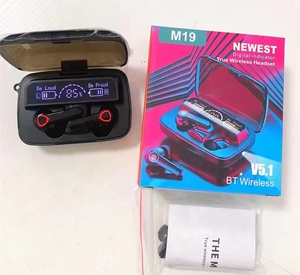
Explore our industrial-grade smart glasses and open-ear acoustic wearables engineered for retail brands, enterprise deployment, and custom OEM manufacturing.
A comprehensive technical evaluation of supply chain maturity, optical waveguide integration, and acoustic micro-engineering for global OEM/ODM procurement decision-makers.
As China's leading smart glasses manufacturing hub headquartered in the Greater Bay Area, our production facilities combine ISO9001 certified cleanroom assembly, high-precision surface-mount technology (SMT), and advanced optical alignment chambers. Operating since 2016, our engineering teams bridge the gap between consumer eyewear aesthetics and complex spatial computing hardware.
The global smart glasses industry is experiencing a paradigm shift. Moving beyond basic Bluetooth audio frames toward full-fledged Augmented Reality (AR) HUD displays and artificial intelligence edge processing, the global market is projected to expand at a CAGR of 27.4% through 2030. China’s manufacturing ecosystem—specifically concentrated within Shenzhen, Dongguan, and Huizhou—commands over 82% of global smart eyewear component integration and original equipment manufacturing.
Selecting the right manufacturing partner in China requires looking beyond simple unit costs. It demands an evaluation of vertical supply chain integration. Leading Chinese factories control everything from frame injection molding (utilizing biocompatible TR90 and lightweight titanium alloys) to SMT micro-PCBA placement, custom acoustic cavity tuning, and automated optical calibration for microLED/diffractive waveguide engines.
A primary challenge in open-ear smart glasses manufacturing is sound leakage—preventing bystander eavesdropping while maintaining rich, immersive bass response for the wearer. Modern enterprise-grade smart glasses designed by top factories implement dual inverse sound wave cancellation algorithms paired with custom directional micro-speakers.
Our manufacturing architecture incorporates sealed acoustic chambers inside ultra-thin temple arms (under 3.8mm profile). By strategically positioning secondary acoustic venting holes that emit anti-phase audio signals, sound leakage is suppressed by up to 28dB at a distance of 0.5 meters, ensuring crystal-clear private calling and immersive audio playback for end-users.
Six core technological competencies built directly into our OEM/ODM production lines to ensure superior device longevity, ergonomic comfort, and regulatory compliance.
Class-100 cleanroom facilities for diffractive optical waveguide bonding, microLED engine alignment, and anti-reflective lens coating with sub-micron tolerance.
Integrated Qualcomm and Bestechnic (BES) Bluetooth SoCs combined with dual beamforming MEMS microphones to filter out 95% of background wind and environmental noise.
Custom dual-battery temple architecture delivering up to 10 hours of continuous active audio playback and 20 days standby with magnetic pogo-pin fast charging.
Nano-coating hydrophobic protection applied to internal PCBAs paired with sonic-welded temple seals, protecting against sweat, torrential rain, and shallow water submersion.
Custom firmware supporting Android/iOS SDK companion apps, real-time voice assistant triggers (ChatGPT/Siri/Google), and touch/gesture control mapping.
Ergonomic frame designs using Swiss EMS TR90 memory resin, skin-safe silicone nose pads, and quick-release interchangeable prescription optical clips.
Key technological shifts that global brand buyers and distributors must evaluate prior to issuing RFP hardware specifications.
The integration of localized AI large language models (LLMs) into wearable smart glasses represents the fastest-growing OEM category. Modern smart glasses are no longer passive audio output devices; they operate as contextual AI assistants. Sourcing managers are increasingly demanding dual-core DSP chipsets capable of running low-latency keyword spotting, live multi-language voice translation, and voice-to-text note-taking directly synchronized with cloud platforms.
While first-generation smart eyewear focused on mono HUD displays for simple turn-by-turn navigation, the 2026 procurement landscape is shifting heavily toward binocular diffractive surface relief waveguides. MicroLED displays with luminance exceeding 3,000,000 nits allow full daylight visibility while maintaining transparency exceeding 85%. Chinese factories leading this transition offer modular optical engines that allow brands to swap standard sunglass lenses with prescription AR display modules.
To mitigate SKU stock risks for global distributors, modern factories are designing smart glasses around modular temple electronics. The smart temple arms containing the Bluetooth chipset, battery, and acoustic drivers are standardized, while the front eyewear frames (Cat-Eye, Wayfarer, Aviator, Round) feature quick-magnetic latch systems. Retail buyers can stock 1 base electronic temple SKU and offer 10+ fashionable frame variations, vastly reducing inventory carrying costs.
| Smart Glasses Product Class | Primary Display / Audio Tech | Weight Range | Typical Battery Runtime | IP Ingress Rating | Target Retail Category |
|---|---|---|---|---|---|
| Everyday Open-Ear Audio Frames | Directional Dual Speaker + Acoustic Venting | 36g – 42g | 8 to 12 Hours Playtime | IP67 / IP68 | Fashion & Lifestyle Retail |
| AI Voice Assistant Smart Eyewear | Dual MEMS ENC + Low-Power AI DSP | 38g – 45g | 10 Hours Active Use | IP68 Waterproof | Tech Brands & Telecom Operators |
| Monocular Outdoor Sports HUD | Single MicroLED + Diffractive Waveguide | 48g – 55g | 5 to 7 Hours Continuous HUD | 5ATM Water Resistant | Cycling & Sports Equipment |
| Full-Binocular AR Spatial Glasses | Dual MicroOLED / Waveguide + SLAM Camera | 65g – 82g | 3 to 5 Hours High-TDP Use | IP54 Splashproof | Enterprise Industry & Gaming |
Empowering global tier-1 brands, retail chains, and hardware startups with complete end-to-end OEM/ODM custom development.
Equipped with 10 high-speed Yamaha SMT lines, automated optical alignment units, and 12 assembly lines capable of delivering 450,000 smart glasses monthly.
Complete international certification documentation including FCC, CE, RoHS, REACH, BQB Bluetooth licensing, and FDA registration for optical frame safety.
From frame CMF finishes (matte, glossy, tortoiseshell) and custom laser engraved logos to proprietary companion iOS/Android app white-labeling and SDK integration.
Detailed answers addressing critical procurement, customization, quality assurance, and manufacturing logistics questions.
Partner with China's leading smart glasses manufacturer. Request our detailed 2026 factory catalog, component specification sheets, or schedule a virtual cleanroom tour with our engineering team.