
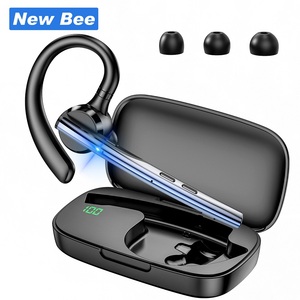
New Bee Executive Comm & GPS Telemetry Headset Watch
BT V5.1
GPS Sync
Noise Cancelling
High-precision GNSS positioning, PPG optical health monitoring arrays, and rugged IP68/5ATM enclosures configured for global B2B distributors and brand owners.
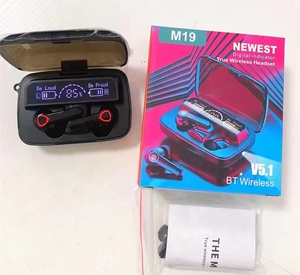
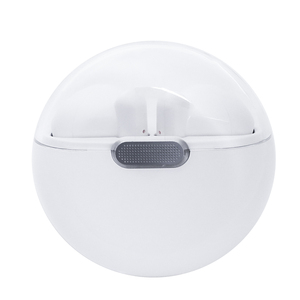
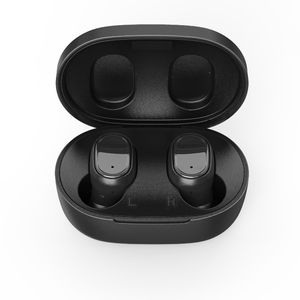

An in-depth guide to hardware stack evaluation, antenna design, power budget balancing, and sensor telemetry calibration for prospective volume buyers and B2B brand owners.
Modern OEM GPS smartwatches rely on dual-band L1+L5 constellation tracking (GPS, GLONASS, BeiDou, Galileo). By processing signals across two distinct radio frequencies, multipath interference in dense urban canyons or dense foliage is mitigated, achieving sub-meter positioning accuracy essential for fitness tracking, commercial logistics, and personal safety telemetry.
Our custom hardware integrates multi-channel Photoplethysmography (PPG) optical sensors operating at 525nm (green) and 940nm (infrared) wavelengths. Algorithms calibrated against gold-standard clinical reference units ensure continuous heart-rate monitoring, pulse oximetry (SpO2), heart rate variability (HRV), and 24-hour sleep staging telemetry via proprietary firmware stacks.
Balancing continuous GPS sampling with high-refresh display demands requires advanced ultra-low-power microcontrollers (such as Nordic Semiconductor or Ambiq Apollo ultra-low-energy microcontrollers). Coupled with custom Li-Polymer battery formulations (up to 2000mAh in heavy-duty variants), devices deliver 7 to 20 days of runtime with magnetic pogo-pin fast charging capability.
Enclosures are engineered with acoustic waterproof membranes, double-o-ring crown seals, and sonic-welded ABS/Alloy frames. Units undergo strict pressure chamber immersion tests to achieve true 5ATM (50 meters hydrostatic depth) ratings for open-water swimming and IP68 dust-tight protection for outdoor endurance applications.
Integrating GPS, Bluetooth 5.3 Low Energy (BLE), and cellular IoT antennas inside compact watch casings demands specialized Laser Direct Structuring (LDS) or flexible printed circuit (FPC) antenna tuning. This maintains radiation efficiency while preserving sleek wearable ergonomics and preventing body attenuation.
Full-stack OEM manufacturing includes white-label mobile app platforms (iOS/Android) and open RESTful APIs/SDKs. Telemetry data—including real-time GPS routes, step cadence, SpO2 logs, and stress metrics—can be redirected securely to third-party enterprise cloud infrastructures or health management portals.

Since 2016, our manufacturing facilities have engineered lifestyle smartwatches, audio smartglasses, and kids safety devices for globally recognized retail brands and enterprise distributors.
As enterprise clients shift from basic activity tracking to advanced health telematics and connected consumer devices, OEM buyers must anticipate critical technology vectors during supplier selection.
Next-generation smartwatches are migrating algorithm processing from the cloud down to the edge chip level. Micro-ML models running directly on ultra-low-power microcontrollers allow real-time detection of arrhythmia, sudden fall events, and specialized athletic movement patterns without requiring active smartphone connectivity.
Beyond standard multi-constellation GPS tracking, emergency response and outdoor rugged smartwatches are rapidly adopting Narrowband Non-Terrestrial Network (NB-NTN) satellite messaging. This enables basic SOS coordinate transmission and two-way messaging directly from the wrist even when completely out of cellular range.
The industry benchmark is rapidly transitioning away from traditional TFT panels toward high-resolution 1.83" to 2.04" AMOLED displays featuring 1000+ nits peak brightness, Always-On Display (AOD) functionality, and ultra-thin glass-on-glass encapsulation for superior readability under direct sunlight.
Form-factor innovations, such as 2-in-1 smartwatch setups containing integrated TWS earbuds inside pop-up watch cases or audio-enabled open-ear smartglasses, represent high-margin procurement growth areas. These hybrid products consolidate wearable tech into single cohesive SKUs.
While standard optical PPG continues to monitor heart rate and oxygen saturation, continuous developments in multi-wavelength spectroscopy and PPG waveform analysis are paving the path for non-invasive blood pressure trend tracking and glucose indicator estimation within commercial consumer fitness bands.
ESG compliance is becoming a key mandate for European and North American retail buyers. Leading OEM suppliers are offering eco-certified watch casings utilizing post-consumer recycled (PCR) plastics, ocean-bound plastic straps, and zero-plastic retail packaging solutions.
Compare standard base platforms to evaluate optimal specs for your brand's targeted price tier and market application.
| Feature Architecture | Entry-Level GPS Fleet | Mid-Tier Lifestyle GPS | Pro Outdoor 5ATM Rugged | Enterprise Health Telemetry |
|---|---|---|---|---|
| Primary GNSS Chip | Single GPS L1 (Mediatek) | Dual-Band GPS + GLONASS | GPS/GLONASS/Galileo/BeiDou L1+L5 | High-Precision GNSS + AGPS |
| Display Technology | 1.83" TFT HD (240x284) | 1.85" Curved IPS LCD | 1.96" Ultra-Bright AMOLED (410x502) | 1.43" Round AMOLED Always-On |
| Biometrics Sensor Array | Single Green LED PPG (HR) | Dual Green + Red PPG (HR + SpO2) | 8-Channel PPG + IR Sensor + G-Sensor | Medical-Grade PPG + Skin Temp + ECG |
| Ingress Protection | IP67 Splash Resistant | IP68 Dust/Waterproof | 5ATM (50m Immersion Tested) | IP68 / 5ATM Optional |
| Battery & Charging | 230mAh / 5 Days / Magnetic | 300mAh / 7 Days / Pogo-Pin | 480mAh - 2000mAh / Up to 20 Days | 400mAh Fast Charge (80% in 45 min) |
| Enclosure Construction | ABS + Polycarbonate | Zinc Alloy Body + IML back | Titanium Bezel + Reinforced TPU | 316L Stainless Steel / Ceramic |
| Communication Stack | BLE 5.0 Data Sync | BLE 5.3 + BT HD Calling | BLE 5.3 + Speaker/Mic + GPS Log | BLE 5.3 + Optional LTE-M / NB-IoT |
Combining rigorous industrial manufacturing discipline with end-to-end software integration to lower total cost of ownership (TCO) and maximize market velocity.
We own and operate proprietary plastic injection, CNC metal machining, and surface treatment lines. This guarantees tight mechanical tolerances, preventing ingress failures and reducing initial NPI tooling lead times down to 25–30 days.
Every single PCB assembly undergoes SMT Automated Optical Inspection (AOI), while assembled watches undergo automated touch-screen latency evaluation, display pixel defect checks, and multi-stage water pressure vacuum testing before packaging.
Unlike basic assembly brokers, our dedicated in-house software engineers maintain the underlying Real-Time Operating System (RTOS) microcode, enabling custom UI animation, specialized sport algorithm tweaks, and custom API telemetry endpoints.
Clear answers regarding Minimum Order Quantities (MOQs), customization scope, certification timelines, and firmware engineering support.
Consult with our engineering team today to receive preliminary DFM feedback, sample evaluations, and complete bill-of-materials (BOM) pricing within 24 hours.
Get a Quote