Engineered for global medical brands, tech importers, and retail distributors. Each platform features turnkey PCBA layout customization, SDK API integration, and certified sensor suites.
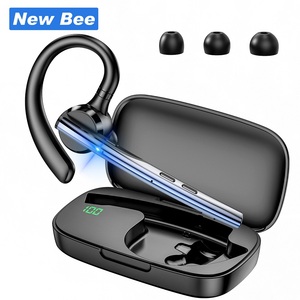
Designed for enterprise audio calls and integrated voice prompt feedback for medical monitoring smartwatches. Ultra-long battery with ergonomic business ear-hook fit.
Contact Us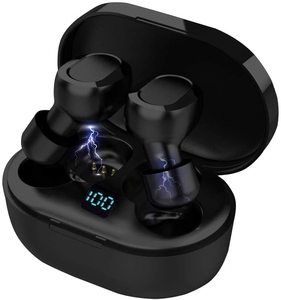
High-demand consumer TWS earbud platform featuring real-time LED battery telemetry, dynamic gaming mode, noise-isolation tips, and customized charging case branding.
Contact Us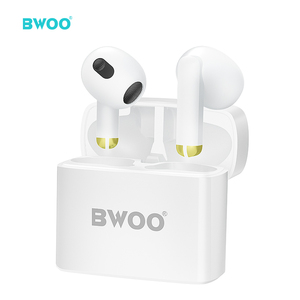
Cost-optimized high-volume OEM earbuds platform. Features fast Type-C charging, instant pairing protocol, clear acoustic chamber design, and flexible packaging customization.
Contact Us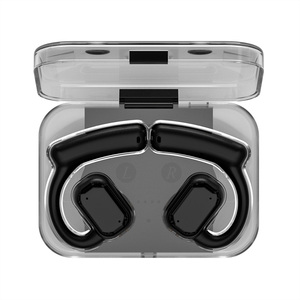
Safety-focused open-ear audio platform maintaining situational awareness during outdoor athletic tracking. Pairs seamlessly with smart health watches over BLE.
Contact Us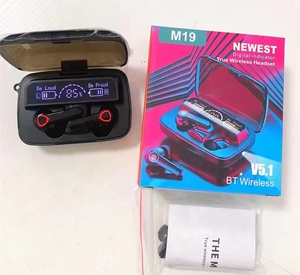
Multifunctional portable audio hub powered by JL Chipset. Features high-capacity emergency mobile charging, intelligent touch sensors, and IPX7 water protection.
Contact Us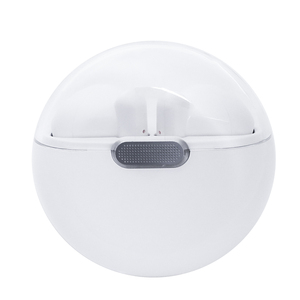
Delivers 10+ hours of continuous music playback per charge. Upgraded Bluetooth 5.3 architecture provides superior RF stability and lower battery consumption.
Contact Us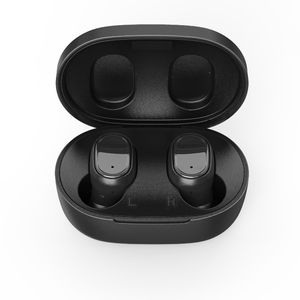
Lightweight sports audio solution built with dynamic driver diaphragms for immersive bass response. Designed for active wearers alongside fitness smartwatches.
Contact Us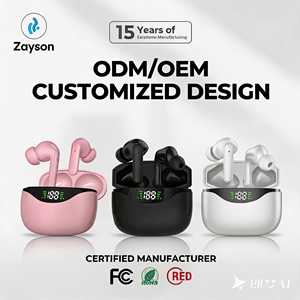
Engineered for intense physical training. Features custom mold shell choices, 10mm composite acoustic drivers, and military-grade moisture isolation engineering.
Contact UsSince 2016, we have maintained a strict, quality-first engineering approach—partnering with tier-1 component suppliers and leading health tech enterprises worldwide.
Integration of high-grade Texas Instruments and Analog Devices ECG AFE chips with medical-grade titanium and stainless steel electrode contact plates for superior Signal-to-Noise Ratio (SNR).
Our manufacturing plants operate under certified ISO 13485 quality management systems. We provide full technical documentation supporting FDA 510(k), CE MDR Class IIa, and RoHS international filings.
We supply customizable iOS and Android companion app codebases, Bluetooth Low Energy (BLE 5.3) data sync protocols, and cloud API endpoints for direct integration into enterprise EHR/EMR platforms.
The global wearable market is undergoing a rapid transition from basic lifestyle step-tracking to clinical-grade personal health monitoring. Central to this evolution is the integration of Electrocardiogram (ECG) technology into smartwatches and wearable bands. For B2B importers, medical device distributors, and private-label brands, selecting an experienced OEM/ODM manufacturing partner requires a thorough understanding of the technical architecture, sensor calibration challenges, and regulatory hurdles involved in producing high-precision ECG smartwatches.
Unlike clinical 12-lead ECG machines used in hospitals, wearable smartwatches utilize a Single-Lead (Lead-I) ECG configuration. The hardware circuit captures the electrical potential difference between the user's wrists or between one wrist and a finger touching an electrode built into the watch crown or bezel.
To achieve high diagnostic accuracy, our OEM PCBA designs integrate state-of-the-art Analog Front-End (AFE) microcontrollers (such as the Texas Instruments ADS1291 or Analog Devices AD8233). Key hardware specifications include:
Technical Information Gain Note: Baseline wander caused by respiration and motion artifacts is a primary cause of false ECG readings in consumer wearables. Our ODM firmware utilizes advanced Digital Signal Processing (DSP) hardware filters—combining a 0.5Hz high-pass filter with an adaptive notch filter—to stabilize waveform baselines within 300 milliseconds of electrode touch.
High-end OEM smartwatches no longer rely solely on ECG or photoplethysmography (PPG) in isolation. By integrating both modalities into a unified sensor stack, our devices deliver advanced diagnostic capabilities:
| Technology Modality | Primary Measurement | Sampling Rate | Power Consumption | Clinical Application |
|---|---|---|---|---|
| Lead-I Dry Electrode ECG | Electrical Cardiac Voltage (P-QRS-T Wave) | 250 Hz - 500 Hz | Low (~1.2 mA active) | AFib, Arrhythmia, PVCs, ST-Segment Analysis |
| Multi-Wavelength PPG | Volumetric Blood Flow (SpO2 & HR) | 25 Hz - 100 Hz | Ultra-Low (~0.4 mA active) | Continuous Pulse Rate, Blood Oxygen saturation |
| ECG + PPG Fusion (PTT) | Pulse Transit Time Differential | Synchronized 250 Hz | Moderate (~1.6 mA active) | Cuffless Blood Pressure Trend Estimation |
A continuous challenge in smartwatch ODM development is maintaining long battery operation while supporting intensive biosignal sampling. Our hardware designs utilize ultra-low-power ARM Cortex-M33 architecture MCUs (such as Nordic Semiconductor nRF5340 or Realtek RTL8763E series) paired with dedicated hardware neural network accelerators.
By leveraging dynamic frequency scaling and sleep-mode power gating, our ECG smartwatches achieve 7 to 10 days of active daily use on a single 250mAh to 300mAh lithium-polymer battery charge—doubling the battery life of typical consumer smartwatches.
Bringing a medical wearable to market requires adherence to international compliance standards. As a specialized OEM/ODM manufacturer, we support brand partners with complete technical documentation packages, including:
Stay ahead of the curve. B2B buyers and importers must align their product roadmaps with key emerging technologies reshaping the global smartwatch sector.
Future ECG smartwatches will transition from simple raw wave display to on-chip TinyML arrhythmia classification. Wearers will receive immediate, localized AI analysis for early detection of premature ventricular contractions (PVCs) and sinus bradycardia without relying on active cloud connections.
Procurement strategies are shifting from one-off hardware sales to recurring subscription services. Hardware OEMs now bundle smartwatches with HIPAA-compliant cloud SDKs, allowing healthcare providers to monitor high-risk cardiac patients in real time via continuous cloud telemetry dashboards.
The convergence of Hearables and Wearables is accelerating. OEM buyers are increasingly seeking synchronized multi-device ecosystems—where open-ear audio smartglasses, bio-sensing TWS earbuds, and ECG smartwatches exchange sensor telemetry seamlessly over Bluetooth Low Energy mesh networks.
Direct answers regarding minimum order quantities, customization parameters, quality control protocols, and software white-labeling.
Our standard MOQ for baseline customized logos, laser engraving, and custom retail packaging is 1,000 units per style. For deep ODM projects—such as custom tooling, unique watch case ID designs, or proprietary PCBA board layouts—our MOQ typically starts at 3,000 to 5,000 units depending on component lead times.
Our Lead-I ECG hardware design demonstrates a >95% signal correlation with standard Lead-I signals captured by clinical 12-lead machines during resting diagnostic tests. While consumer wearables are designed for general wellness and early risk identification rather than definitive clinical diagnosis, our AFE circuits meet strict noise reduction standards to support professional medical screening applications.
Yes. We provide complete white-label app customization services. We will modify the user interface branding, color schemes, app icons, privacy policy links, and store listing metadata. Additionally, we provide native iOS/Android SDKs and API documentation if your engineering team prefers to integrate our device BLE protocol into your existing enterprise app.
Every manufactured unit undergoes a 100% 4-step quality validation process: (1) Automated Optical Inspection (AOI) for SMT circuit boards; (2) Pressure vessel ingress testing for IP68/5ATM water resistance; (3) Simulated cardiac signal wave testing for ECG/PPG calibration; and (4) 24-hour active aging and battery charge-discharge cycle tests.
Initial sample units with standard laser-etched branding are prepared within 5 to 7 business days. Custom ODM industrial samples requiring new 3D enclosure tooling take approximately 30 to 45 days. Once pre-production samples are approved, mass production lead time is generally 30 to 35 days, subject to global supply chain scheduling.