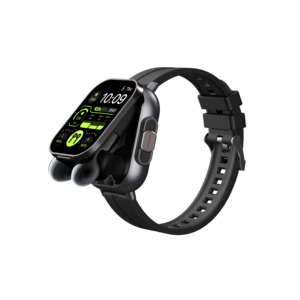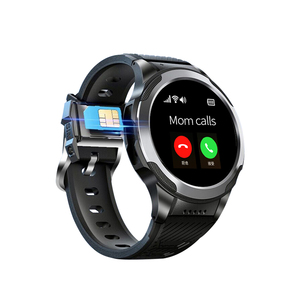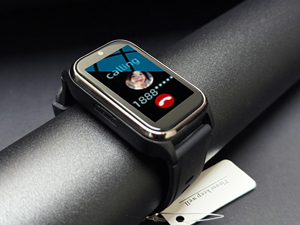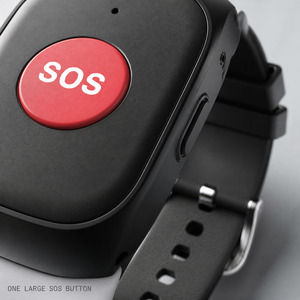
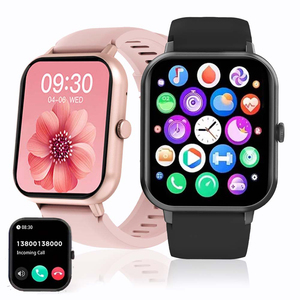
SENBONO ZL54CJ Square HD Bluetooth Calling Smartwatch
- High-Resolution Square TFT Touch Display
- Integrated Speaker & High-Sensitivity Mic
- PPG Heart Rate & Multi-Sport Tracking
- Cross-Platform iOS & Android Sync
In the rapidly consolidating smart wearable sector, voice communication capabilities have transitioned from a premium luxury feature into a baseline OEM mandate. Driven by advancements in single-chip dual-mode Bluetooth (BLE 5.3 + Classic Audio), low-power micro-cellular 4G VoLTE modems, and AI-driven Environmental Noise Cancellation (ENC), global demand for voice-enabled wearables is scaling at an unprecedented trajectory. This technical procurement report evaluates the leading calling watch manufacturing hubs, breakdown metrics for factory selection, hardware architecture standards, and key OEM product lines ready for mass deployment.
Explore our turnkey OEM/ODM calling watch platforms engineered with high-gain acoustic cavity designs, precision PPG health sensor arrays, and validated radio-frequency performance.
Selecting a qualified OEM/ODM partner in the smartwatch domain requires rigorous scrutiny beyond unit costs. When evaluating calling watch production facilities—particularly across tech manufacturing clusters like Shenzhen, Dongguan, and Huizhou—procurement officers must audit five technical pillars:
1. RF Antenna Performance & Anechoic Chamber Testing: Voice wearables rely on compact LDS (Laser Direct Structuring) or FPC antennas tuned within extremely constrained chassis environments. Top tier factories utilize internal CTIA-certified OTA (Over-The-Air) testing chambers to guarantee TRP (Total Radiated Power) and TIS (Total Isotropic Sensitivity) pass carrier standards for both Bluetooth and cellular bands.
2. Acoustic Cavity & Waterproof Membrane Design: Delivering clear 85dB+ voice playback out of a 1.8-inch watch frame requires custom acoustic chamber engineering. Leading manufacturers incorporate IP68 and 5ATM ePTFE waterproof venting membranes that equalize pressure while preventing liquid ingress without damping micro-speaker frequency response.
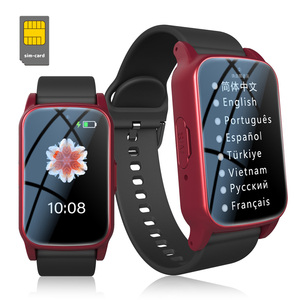
3. Dual-Mode Bluetooth Architecture vs. Micro-Cellular 4G LTE: B2B buyers must align factory capabilities with target use cases. Bluetooth calling models utilize single-chip SoC solutions (such as Realtek, Jerry, or Bestechnic) offering 5 to 7 days of runtime. Conversely, standalone 4G LTE calling watches require SIM/eSIM setups, Android/RTOS basebands (Qualcomm or UNISOC chips), and specialized power management ICs (PMICs).
A side-by-side engineering evaluation for retail brand managers, distributor chains, and telecare solutions providers.
| Architecture Type | Primary Chipset Platform | Voice Connection Tech | Average Battery Life | Water Ingress Rating | Target Retail Segment |
|---|---|---|---|---|---|
| Single-Chip BLE Calling | Realtek 8763E / JL7012 | Bluetooth 5.3 BLE + Dual Audio | 5 - 7 Days | IP68 Standard | Mass Market Lifestyle & Fitness |
| Standalone 4G Cellular | UNISOC 8541E / W307 | 4G LTE VoLTE / Nano-SIM | 1 - 3 Days | IP67 / IP68 | Kids Safety & Senior Telecare |
| Outdoor / Rugged Calling | Bestechnic BES2700 | Bluetooth 5.3 + Dual Mic ENC | 7 - 12 Days | 5ATM (50m Submersion) | Extreme Sports & Tactical |
| Hybrid TWS Wearable | Custom Dual DSP Platform | Local Earbud Sync + BT Call | 3 - 4 Days | IP65 Splash Proof | Commuter & Gadget Enthusiasts |
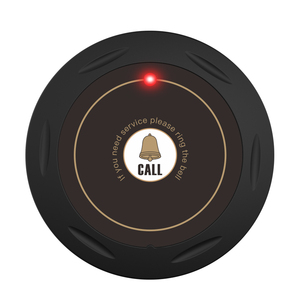
| Industrial RF Pager | Sub-1GHz Microcontroller | 433MHz / 868MHz Wireless RF | 15 - 30 Days | IP67 Sealed Casing | Hospitality, Medical & Nursing |
Key innovations shaping the next 24 to 36 months of smart smartwatch OEM manufacturing.
Factory integration of neural network noise suppression algorithms (NN-ENC) combined with dual beamforming microphones isolates voice signals from wind noise up to 30km/h, ensuring crystal-clear calling during outdoor cycling or high-noise work environments.
Transitioning from traditional TFT panels to ultra-bright (1000+ nits) Always-On Display (AOD) AMOLED screens with lower power consumption. On-cell capacitive touch integration enables thinner watch cases (<10.5mm) while maintaining IP68 integrity.
Next-gen bio-sensor arrays combine multi-wavelength optical PPG (green, red, IR LEDs) with ECG electrodes, delivering 24/7 continuous heart rate monitoring, arterial oxygen saturation (SpO2) estimation, and stress index calculations directly synced to native mobile apps.
Combining advanced hardware R&D with stringent multi-stage quality control to guarantee global market compliance.
Every mass-production batch undergoes 100% automated optical inspection (AOI), 5ATM hydrostatic pressure chamber testing, high-impact drop tests, thermal shock chamber cycling, and strap tension stress validation to ensure ultra-low RMA return rates.
Full regulatory support for global distribution networks. All calling watch platforms carry pre-certified FCC, CE, RoHS, REACH, and UN38.3 lithium battery transportation clearance, accelerating time-to-market for retail importers.
We provide open API documentation, iOS/Android companion app white-label customization, and custom firmware compilation (UI language packs, watch-face dial libraries, OTA server integration) tailored to your brand identity.
Direct answers to common OEM/ODM buyer inquiries regarding production, customization, and logistics.
Standard OEM customization (logo laser engraving, custom gift box packaging, user manual, and default firmware boot screen) starts at 1,000 units per model colorway. For deep ODM projects involving customized industrial tooling or modified PCB layouts, MOQ typically starts at 3,000 to 5,000 units.
We utilize specialized ePTFE (expanded polytetrafluoroethylene) acoustic membranes positioned between the inner cavity speaker housing and external watch chassis. This allows air displacement for clear sound output while completely blocking water molecules up to 5ATM pressures.
Our smartwatches are designed for general wellness, fitness tracking, and personal lifestyle insights. While optical sensors deliver high-accuracy pulse and SpO2 estimations calibrated against reference devices, they are classified as consumer electronics rather than regulated medical devices.
Golden sample sign-off and packaging design approval initiate production. Standard mass manufacturing takes approximately 25 to 30 calendar days for initial orders. Repeat OEM orders typically ship within 18 to 22 days via established component buffer stocking programs.
Yes. Our firmware supports up to 32 native UI language translations with dynamic font rendering. For 4G cellular models (Senior SOS and Kids watches), baseband modems can be tailored with specific frequency bands (B1/B3/B5/B7/B8/B20 for EU/Asia or B2/B4/B5/B12/B66/B71 for North America).
All factory shipments include a standard 12-month manufacturer limited warranty. We provide 1% spare units/components for high-volume orders, dedicated FAE (Field Application Engineer) support for software bugs, and continuous cloud-based OTA firmware update support.