High-performance TWS & gaming audio solutions engineered for low latency, extended battery life, and private label customization.
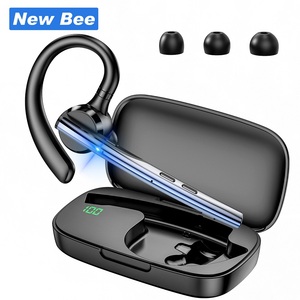
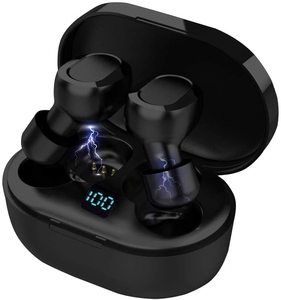
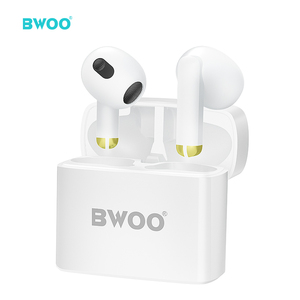
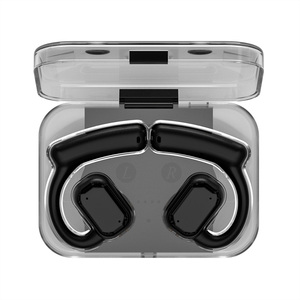
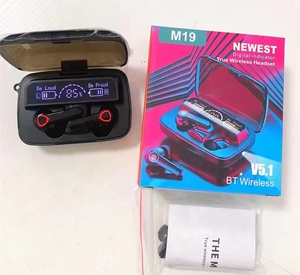
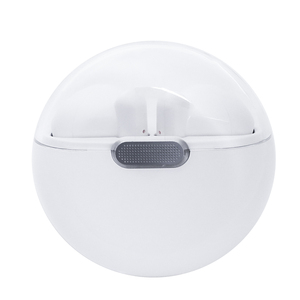
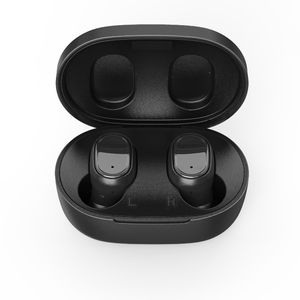
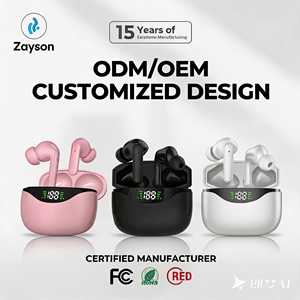
The global mobile gaming market has surpassed $100 billion in annual revenue, driving unprecedented demand for specialized, high-performance TWS (True Wireless Stereo) audio accessories. As competitive esports titles like PUBG Mobile, Call of Duty Mobile, and Mobile Legends demand instantaneous spatial audio cues, consumer expectations have rendered standard Bluetooth latency (150ms-250ms) obsolete. Today, top Chinese gaming earbuds manufacturers in acoustic hubs like Shenzhen, Dongguan, and Huizhou are spearheading a structural migration toward ultra-low latency protocols (<35ms via Bluetooth 5.3/5.4 and dual-mode 2.4GHz USB-C dongles).
For enterprise B2B buyers, consumer electronics importers, and private-label brands, navigating the Chinese supplier landscape requires evaluating more than just wholesale unit pricing. High-performing gaming earbuds demand precise System-on-Chip (SoC) selection (e.g., Bestechnic, Realtek, Actions, and Jerry JL chipsets), specialized acoustic cavity engineering, dynamic mic-beamforming algorithms for Environmental Noise Cancellation (ENC), and strict thermal management during rapid charging cycles. This comprehensive whitepaper provides international procurement managers with an inside look into factory capabilities, quality control benchmarks, and procurement trends shaping the 2025-2030 gaming peripheral market.
Sourcing teams must anticipate key technological shifts to prevent inventory obsolescence and maximize product margins. Advanced Chinese OEM/ODM factories are focusing R&D efforts on three primary audio innovations:
A. LE Audio & LC3 Codec Integration: Next-generation Bluetooth Low Energy (BLE) Audio with the LC3 (Low Complexity Communication Codec) is replacing traditional SBC and AAC standards. LC3 offers superior audio fidelity at less than half the bit rate, reducing power consumption by up to 30% while maintaining sub-40ms native latency across compatible Android and Windows platforms.
B. Dual-Mode 2.4GHz + Bluetooth Hybrid Architecture: Premium gaming earbuds now feature integrated, ultra-compact USB-C 2.4GHz wireless dongles stored directly within the charging case. By bypassing standard Bluetooth stack overhead, these hybrid models achieve true zero-perceivable latency (15ms - 20ms), enabling seamless plug-and-play connectivity across Nintendo Switch, PlayStation 5, PC, and mobile gaming rigs.
C. Hybrid Active Noise Cancellation (ANC) & Spatial Sound Engine: Advanced multi-core DSP chipsets now enable combined Hybrid ANC (-35dB to -45dB) and real-time 3D spatial acoustic processing within compact earbud form factors. This allows gamers to pinpoint enemy footstep coordinates while isolating external ambient environment noise.
Comparing mainstream OEM architectural configurations across Chinese export factories.
| Tier Class | Primary SoC Platform | Latency Target | Connectivity | Battery & ANC Tech | Target B2B Wholesale Bracket |
|---|---|---|---|---|---|
| Entry-Level / Promotional | JL (Jerry) / Bluetrum | 60ms - 80ms | Bluetooth 5.1 / 5.2 | 3-5 hrs / ENC Software Noise Reduction | $3.50 - $6.80 USD |
| Mid-Tier Performance | Realtek / Actions Semi | 35ms - 50ms | Bluetooth 5.3 + Game Mode | 5-8 hrs / Quad-Mic Dual ENC | $7.50 - $14.00 USD |
| Flagship / Pro Esports | Bestechnic (BES) / Qualcomm | 15ms - 25ms | BT 5.4 + 2.4G USB-C Dongle | 8-10 hrs / Hybrid ANC (-42dB) + Spatial Audio | $15.50 - $28.00 USD |
| Open-Ear / Wearable Audio | ATS / JL Low-Power | 40ms - 60ms | Directional Air Conduction | 6-10 hrs / Open-Ear Comfort Ergonomics | $8.00 - $16.50 USD |
World-class China gaming earbud factories execute strict quality control at every phase of production. Raw component incoming inspection (IQC) validates battery safety circuits (UN38.3, MSDS), speaker diaphragm compliance, and plastic injection housing integrity. During assembly, automated Surface Mount Technology (SMT) lines ensure 100% placement precision for micro-components.
Final pre-shipment inspections follow strict international Acceptable Quality Limit standards (AQL 1.0 Major / 2.5 Minor), subjecting finished units to acoustic frequency response sweeps, RF wireless range chamber evaluations, drop tests, and IPX5/IPX7 waterproof submersion testing.
Differentiating your product line in competitive retail channels requires custom industrial design. Leading Chinese exporters offer comprehensive ODM white-label services, including rapid 3D sample prototyping, custom acoustic cavity tuning, customized RGB LED lighting profiles, and localized firmware development (voice prompts, custom EQ presets, touch gesture controls).
Factory partners also support retail packaging customization—from eco-friendly FSC-certified gift boxes to specialized blister packs—complete with regional compliance marks (CE, FCC, RoHS, REACH, WEEE) required for European and North American customs clearance.
Executing a successful gaming earbud procurement campaign from Chinese factories involves a structured 6-step manufacturing workflow engineered to minimize lead times and guarantee specification compliance:
1. RFQ & Acoustic Specification Definition: Alignment on target latency (<35ms vs standard), SoC platform choice, dynamic driver diameter (8mm, 10mm, 12mm), ANC requirements, and Target Landed Cost (TLC).
2. Golden Sample Prototyping: Fabrication of functional samples within 7-14 business days, including acoustic curve verification using artificial ear simulators (B&K HATS system).
3. Tooling & Mold Production: For custom chassis designs, precision steel injection molds are machined within 25-35 days, followed by trial plastic molding shots.
4. SMT & Sub-Assembly Production: High-speed SMT placement of Bluetooth ICs, power management chips, crystal oscillators, and protection circuits onto multi-layer PCBs.
5. Automated Assembly & Testing: Cleanroom acoustic sealing, battery spot welding, laser marking of logos, and 100% automated acoustic curve testing.
6. Global Export Logistics: Compliant sea, air, or express freight handling complete with UN38.3 battery transport certificates and export customs documentation.
Direct insights for procurement directors, brand owners, and logistics managers sourcing from China.
Standard MOQ for private-label customization (custom logo silk-screening, customized color box packaging, and custom Bluetooth pairing names) typically starts at 1,000 to 2,000 units per colorway for existing factory molds. For completely custom ID plastic injection molds (custom ODM tooling), MOQ generally starts at 5,000 to 10,000 units to amortize mold setup costs efficiently.
Sub-35ms low latency is achieved through optimized dual-mode firmware architecture operating on specialized audio chipsets. Factories tune the buffer size within the Bluetooth stack, implement custom audio compression protocols (such as compressed AAC or proprietary low-latency game codecs), and leverage Bluetooth 5.3/5.4's enhanced channel sounding and frequency hopping algorithms to minimize packet retransmissions.
For North America, products require FCC ID certification for RF emissions, along with UL2054 / IEEE1725 battery safety documentation. For the European Union, CE-RED (Radio Equipment Directive), RoHS compliance (hazardous substances restrictions), REACH, and WEEE registration are mandatory. Additionally, all lithium-ion charging cases must hold UN38.3 battery transport clearance and MSDS safety data sheets for air/sea transit.
For repeat orders utilizing standard factory tooling, mass production lead times generally range between 25 to 30 calendar days following pre-production sample approval and deposit receipt. Initial OEM custom orders requiring custom packaging print runs or unique housing color matching (Pantone matching) typically take 35 to 40 days. New ODM projects involving custom plastic molds require an additional 30 to 45 days for mold tooling and trial injection runs.
Reputable Chinese manufacturing exporters provide a standard 12-month quality warranty on all TWS audio products. B2B buyers typically select between two RMA resolution methods: (1) Receiving 0.5% to 1.0% free spare units (FOC - Free of Charge) included directly inside the shipment container to cover localized retail replacements, or (2) Credit notes and factory replacements applied to the subsequent production run for verified manufacturing defects.
Connect directly with China's leading acoustic engineers and OEM gaming earbud production specialists. Receive competitive pricing, technical datasheets, and sample evaluations within 24 hours.