Explore our OEM/ODM product portfolio engineered for home healthcare, professional cardiology clinics, veterinary medicine, and endurance athletic tracking.
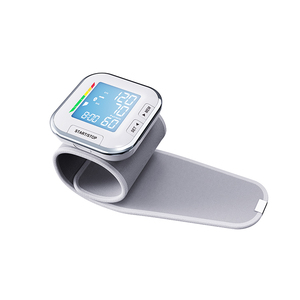
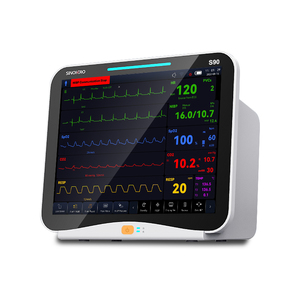
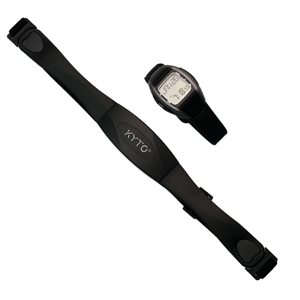
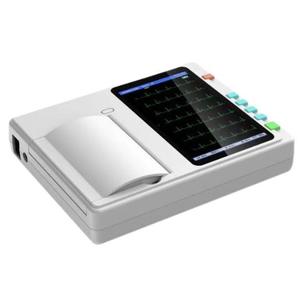
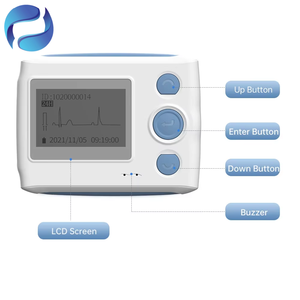
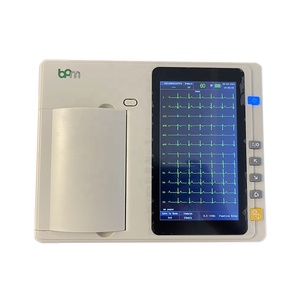
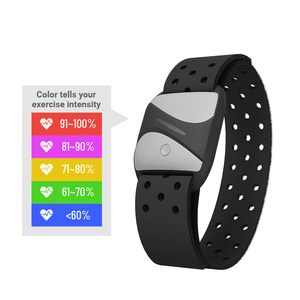
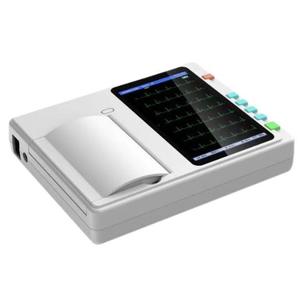
Technical evaluation matrix comparing multi-lead ECG microchips, optical PPG arrays, and oscillometric blood pressure modules across manufacturing specifications.
| Product Category | Sensor Core Architecture | Sampling Rate / SNR | Primary Application | Regulatory Certification | Battery & Power Management |
|---|---|---|---|---|---|
| 12-Lead Handheld ECG | Bio-Potential AFE ADS1292R + 32-bit ARM MCU | 1000 Hz / >105 dB | Clinical Cardiology, Vet Clinics | CE Class II, ISO 13485 | 3.7V Li-ion (12h Continuous Diagnostic) |
| Optical HR Armband | Green/IR Dual Wavelength PPG + 3-Axis Accelerometer | 250 Hz / >85 dB | Endurance Running, Cycling, HIIT | CE, FCC, RoHS, IP68 | Magnetic Pogo Pin (20h Active Training) |
| Chest Strap Monitor | Conductive Polymer ECG Electrodes + Pulse IC | 500 Hz / >95 dB | Heart Rate Variability (HRV), Athletics | CE, FCC, REACH | CR2032 Coin Cell (Up to 12 Months) |
| Wrist BP & HR Monitor | Piezoelectric Pressure Transducer + Micro Air Pump | Static Pressure ±3mmHg | Home Telehealth, Senior Care | CE Medical, FDA 510(k) Ready | Type-C Rechargeable / AAA Batteries |
An executive whitepaper detailing paradigm shifts in wearable sensors, AI algorithm deployment, and regulatory compliance for global medical equipment buyers.
Traditional heart rate monitors relied on cloud processing to detect irregular cardiac rhythms such as Atrial Fibrillation (AFib), Premature Ventricular Contractions (PVCs), and Sinus Bradycardia. Modern OEM manufacturing integrates low-power Neural Processing Units (NPUs) directly into local microcontroller microchips.
By executing lightweight Convolutional Neural Networks (CNN) locally on the device, modern 12-lead EKG machines and wearable armbands reduce latency to under 50 milliseconds while safeguarding patient health data privacy under strict HIPAA and GDPR frameworks.
The consumer wellness and clinical diagnostic markets are rapidly converging. Procurement departments are demanding dual-mode heart rate monitors that seamlessly switch between continuous Photoplethysmography (PPG) optical tracking during low-motion periods and ECG pulse detection during intense athletic activity.
Combining optical PPG, ECG electrodes, continuous SpO2 oxygen saturation sensors, and 3-axis motion accelerometers allows algorithms to filter out motion artifacts—the leading cause of false heart rate spikes in fitness trackers and patient telemetry monitors.
With heart rate monitors being worn continuously for 24-hour periods, skin irritation caused by sub-standard silicone or nickel-alloy contacts presents a critical liability for brand owners. Leading factories now mandate ISO 10993 cytotoxicity and sensitization testing across all wristbands, chest straps, and metal electrodes.
Furthermore, standard IP67 ratings are being replaced by 5ATM water resistance standards (capable of withstanding hydrostatic pressures equivalent to 50 meters depth). This requires liquid silicone injection molding (LIM) and nano-hydrophobic PCB coatings.
Hardware alone no longer guarantees market leadership. B2B procurement partners require customizable Software Development Kits (SDKs) for iOS, Android, Windows, and Linux to integrate incoming Bluetooth Low Energy (BLE 5.3) data streams into hospital Electronic Health Records (EHR) systems or fitness applications.
Modern factories provide white-label companion mobile apps alongside raw Bluetooth GATT service UUID tables, enabling brands to launch custom solutions within weeks rather than months.
From custom tooling mold design and SMT circuit assembly to automated optical inspection (AOI) and final enclosure sealing, our state-of-the-art facilities ensure complete supply chain control and zero-defect yield targets.
Our production facilities maintain ISO 13485 quality management certification for medical devices. All products carry CE Class II, FCC, RoHS, and REACH documentation, accelerating your regulatory filing processes worldwide.
Every single heart rate monitor unit undergoes automated artificial simulator testing (Fluke MedSim) to verify ECG frequency response, optical PPG light penetration depth, and microvolt signal-to-noise thresholds before packaging.
Answers to critical questions asked by medical supply distributors, brand owners, and procurement managers.